
A Closer Look at Nostalgia of the Future
Nostalgia of the Future – Japonism
Nostalgie du Futur “Le Japonisme”
A Closer Look at Nostalgia of the Future
At long last, Mana Fukui released her recording, Nostalgia of the Future. In the year 2025, not many Japanese people may recognize the name Mana Fukui. However, Mana is an outstanding pianist whose performances are worth listening to, as she has truly taken pianism to its peak.
Mana has recorded French pieces by the likes of Debussy, Ravel, Boulanger, and Séverac, as well as pieces of unique color by Scriabin, Szymanowski, Ligeti, and Toru Takemitsu. These pieces have been curated into three albums, each with its own concept. The first album, Japonism, features Debussy and Ravel. The second album, The Orient and Japan, has Scriabin, Debussy, Szymanowski, and Toru Takemitsu. The third album, A Collection of Little Masterpieces, features Debussy, Lili Boulanger, Séverac, and Ligeti. These masterpieces, ranging from the 19th to the 20th century, have now been instilled with new life by Mana Fukui in the 21st century.
Mana Fukui was born in Saitama Prefecture. Although she didn’t come from a musical family, her mother noticed one day that 3-year-old Mana had sat down in front of an upright piano and refused to get up. She then enrolled Mana in the neighborhood Yamaha Music School. It’s a common pattern, but that was the start of Mana’s life as a pianist.
Mana met with a significant turning point when she was ten years old. Someone in the neighborhood offered to introduce her to a pianist, and so she went all the way to Yokosuka to visit him. That pianist was none other than Minoru Nojima, one of Japan’s most famous major pianists. Mana did as she was told and played the piano in front of Nojima, who later called her mother to say, “I would like to teach her.” Nojima was a world-class pianist. It was only natural that her mother politely declined. However, Mana would later listen to Nojima’s rendition of Miroirs by Ravel and be indescribably moved: “I want to make music like this. I want to learn from Mr. Nojima.”
After Mana knocked on Nojima’s doors, she decided she would continue to Toho Girls’ Senior High School and Toho Gakuen School of Music. And once she graduated, she would study abroad in France. These choices were undoubtedly influenced by Minoru Nojima, whom she revered as a teacher, and other mentors like Ichiro Nodaira, who taught her composition techniques, fugue and accompaniment, harmony, and analysis.
In France, she first studied privately under Jean Koerner at the Paris Conservatory while also studying under Denis Comtet in the piano course and accompaniment course at Paris’ 17th arrondissement, after which she graduated with a unanimous First Prize in her examination. Then, she became a teacher at a conservatory in Clamart while also teaching piano at the Conservatoire de Musique André Navarra in Charenton-le-Pont, teaching the next generation of musicians at two schools while doing musical performances as well. In addition to standing on stage for yearly solo recitals and numerous chamber music performances, she would receive one invitation after another to perform at contemporary music festivals, the Courchevel Fête de la Musique, and more. As for her repertoire, above all else, she held contemporary music close to her heart. In particular, she enjoyed composers whose musical expressions were distinctive: Bartók, Stravinsky, Fauré, Ravel, Debussy, Scriabin, Szymanowski, and more. Respected enough by her peers to be an examiner for the French national performance diploma, she had an active career for those 18 years.
Then, in 2015, she left France and returned to Japan. She moved her home base to the countryside overlooking the Yatsugatake mountains, continuing her eager performance career of solo and chamber performances, contemporary dance and video collaborations, and more. Her work, mainly in the Tokyo, Nagano, and Yamanashi areas, has been receiving high praise.
Mana Fukui’s performances are orthodox yet striking. She faces the composers and pieces with sincerity, looking at the full context—from the piece’s inspiration to the social climate—and gathering in-depth research to bring forth an unparalleled level of persuasiveness. Furthermore, from her traditional analysis of each piece, she masterfully distinguishes and portrays each work’s character, bringing out the composer’s true intentions clearly. She maintains their dynamic shaping while also conveying meticulous, subtle delicateness and poetically inspired progressions to bring forth immeasurable musical excitement.
First, if I were to give an example, her Debussy is outstanding. Her color sense is remarkably keen, creating an infinite variety of expressions with a touch that changes like a gradation. It is truly like a tapestry woven of rich yet delicate colors. She masterfully uses delicate keystrokes and half-pedaling as she pleases, depicting layer upon layer of depth and levels, while building the mysterious world of sound left behind in Debussy’s sheet music. To hear it is truly exhilarating. In Images II, Préludes, Arabesque No. 1, and Claire de lune, it goes without saying that she has deep empathy and acute sensibilities toward each piece. Her fresh and vibrant approach in stitching together her own flashes of inspiration to create moments of conviction also aligns with the true essence of French pianism. It is astounding how every sound, as well as its sequences, brings with it statements of such magnitude, carrying a universal persuasiveness.
Next, there is Ravel. Mana’s Ravel is incredibly introspective and contemplative. Her “Jeux d’eau” and “Ma Mére L’Oye” are filled to the brim with high-level analysis and intuitive conviction that simply cannot be achieved from reading the sheet music alone. She has a sweet-ringing tone and a stride that flows without hesitation, and these are accompanied by the exquisite changing of hues, weaving together a fantasy filled with imagination. She masterfully melds together an ambience of wit and sophistication, eloquently painting the scene for us with a clear structure and swaying colors.
Due to my limited amount of space, I will have to reluctantly omit my exposition on the other pieces, but Mana’s pianism features a distinct direction. During the performance, the scene visually comes to life right before the audience’s very eyes. Even to begin with, French music from the 19th to the 20th century flourished around the world with unparalleled originality and diversity. Harpsichord music from the French Baroque period was still deeply rooted, with Saint-Saëns and other composers tending to stick firmly to traditional classical conventions. While comic operas by the likes of Rossini, Donizetti, and Auber were being highly praised by the people, impressionists and symbolists like Debussy, Ravel, and Fauré gained prominence, with other trends like neoclassicism emerging as well. A time in which music of completely different styles appeared simultaneously was unheard of in the world. In other words, at the root of French music, you will find an original music culture that focuses not only on music, but other facets like art and culture for greater enjoyment.
This was facilitated by the salon culture that broke out in Paris. Nobility and people of culture at the time prepared these venues together, successfully developing a special place in which a diverse array of artists could gather to appreciate music and art or debate literary theories. Painters like Delacroix, Courbet, Rousseau, and Millet, poets like Verlaine, Mallarmé, and Baudelaire, and scholars of literature like Stendhal, Maupassant, and Jean Cocteau would gather, as well as musicians from outside of France, such as Chopin, Liszt, and Stravinsky. One main factor was that Paris had the capacity to receive artists from abroad, which was also why they later became connected with the Ballets Russes. That is to say, such cumulative knowledge and intuition are necessary to discuss 19th-century France.
French people are often found saying “au premier degré” and “au deuxième degré.” It seems that the former means “in the literal sense” and the latter means “in the figurative sense.” In other words, the French people love to always look into the true essence of everything and find what is hidden within. Rather than ordinary functionality, they have a national tendency to focus on elegance and spirit. This mentality is deeply rooted in music as well. After 18 years in France, Mana Fukui has experienced this in person and can empathize as she combines all these factors. She is one of the few Japanese pianists who can do this while also adding her own personal flair.
When Mana was a 6th-grade elementary school student, her mother asked, “Which path do you want to take? Music or studying?” Mana replied, “Studying is just memorizing what they teach you. That’s why I want to choose music and look for answers until I die.”
True to her words, Mana is undeniably pursuing her own music through trial and error, now and for the rest of her life. She has cemented her Japanese identity and uses her days in France as a source of encouragement, which is precisely why the three concepts presented in Nostalgia of the Future have compelled us with such overwhelming persuasiveness. This goes beyond the realm of cultural exchange between Japan and France. She can use the universal language of music to communicate humanity’s shared prayers for peace. This audio was also recorded by taking full advantage of cutting-edge technology, and I believe more details about this will be discussed on a separate page. However, in any case, Mana Fukui’s Nostalgia of the Future is a boisterous dance of colors like that of a kaleidoscope. It is a must-have album that I want by my side for listening to at all times.
Yudai Majima (Music Critic)
Yudai Majima
Music Critic, Composer, Arranger, and Producer
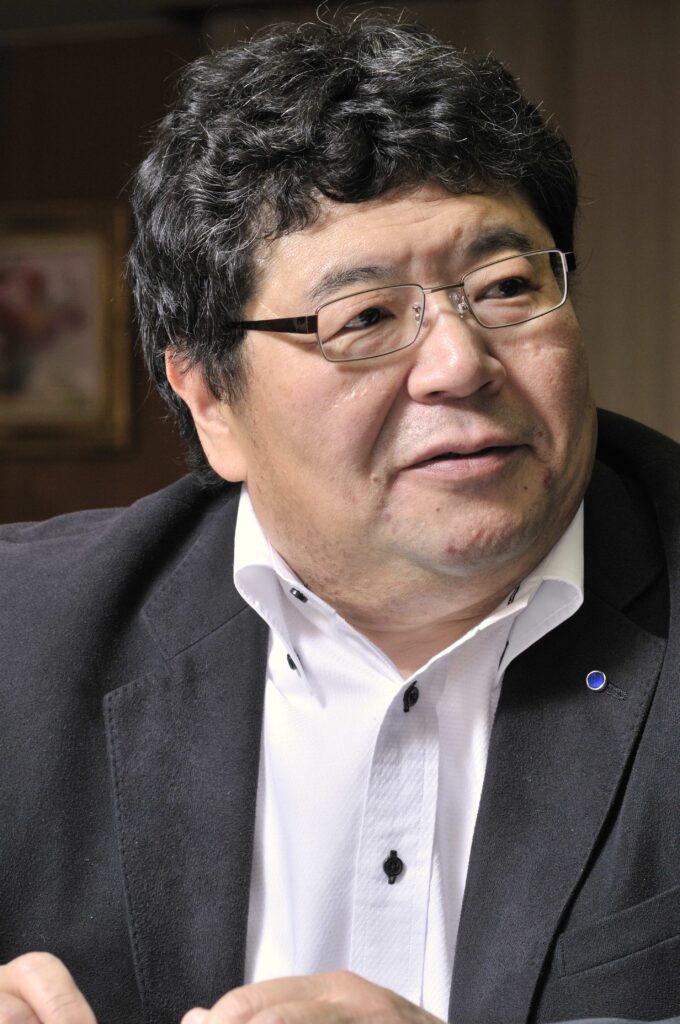
Majima began piano at the age of five and started studying music composition in middle school. In 1973, he gained recognition for composing, releasing, and personally conducting the piece “Transformation for Sopranos and Japanese-Western Ensembles.” Currently, Majima continues his prolific writing career as he writes for the Asahi Shimbun and other major newspapers, as well as the Ongaku no Tomo music magazine. He also writes program notes for concerts, writer notes for CDs and DVDs, scripts for musicals, and more. He has also hosted and appeared on NHK-FM’s Best of Classic, Sunday Classicwide, etc., while also judging for various competitions.
He has been invited to broadcast stations and music halls all across Japan, conducting lectures and concerts with the late Hiroko Nakamura and Stanislav Bunin. Meanwhile, he has also actively produced and made appearances at concerts all over the country: Yamanashi Prefectural Citizen’s Culture Hall (musical theater concert), Tokyo’s Bösendorfer Japan (Beauty and the Beast series), Yamaha Ginza in Tokyo (Yudai Majima production/series), Canora Hall in Okaya (beginner classical series, exploring classical music series), etc.
His publications include Glenn Gould and 32 Pianists (PHP Institute Inc.), and Pianist Genealogy (Ongaku no Tomo Sha), while directoral works include Piano and Pianist New Edition (Ongaku no Tomo Sha). Majima also has numerous co-publications. His latest work is Fantasy for the Big Apple, dedicated to artist Masaaki Sato.
Majima has been an instructor at Asahi Culture Center Shinjuku, Yomiuri Culture Center Hachioji, and Yamanashi Eiwa College’s Maple College. He is currently an expert committee member at the Japan Federation of Musicians, artistic advisor at the YCC Prefectural Citizens’ Culture Hall, an advisor at the Mt.Fuji Kawaguchiko Music Festival, and chairman of Yudai Majima’s Omoshiro-classic.
