
Resonance Across the Centuries — Hall of Halls
Hall of Halls, Tatsushi Omori, Yoko Kamihara
An Invitation to a Musical Journey Across the Centuries
“Hall of Halls,” located in Kiyosato, Yamanashi, houses approximately 250 automatic musical instruments produced between the late 19th and early 20th centuries across Europe and the United States, including Switzerland and Germany.
This album documents the sound of these historical instruments preserved within the museum.
From cylinder and disc music boxes to self-playing organs, pianos, violins, and even automata, these instruments—crafted with the most advanced technologies of their time—are not merely machines, but embodiments of musical culture itself.
Through this recording, listeners are invited to experience both the music they produce and the historical breath that lies behind them.
Before the age of radio and television, music was an integral part of everyday life.
Not only in opera houses and concert halls, but also in restaurants, taverns, and on street corners, musicians brought sound into the world.
At the same time, in Europe and America, a variety of automatic instruments were developed—devices capable of producing music at the press of a switch—offering new ways to experience music.
This album is an attempt to revive that historical listening experience in the present day.
The Chickering Ampico Grand Piano
One of the most symbolic instruments featured in this album is the 9-foot Chickering Ampico grand piano, built in 1926.
This instrument is used in all tracks except No. 3 (Csárdás).
Originally one of the leading piano manufacturers in the United States, Chickering produced this full concert grand, which was fitted with an Ampico reproducing system as a demonstration model.
Through perforated roll paper, the instrument faithfully reproduces the original pianist’s touch, articulation, dynamics, and even pedaling.
Many renowned pianists of the time signed with the Ampico company to preserve their performances for future generations.
As a result, this instrument carries value beyond mere playback—it is a record of performance itself.
In 2023, the instrument underwent its first full overhaul in approximately 50 years, restoring its magnificent sound for modern audiences.
Newly restrung wires have deepened its brilliant tonal character, while renewed hammers and refined action have further enhanced its expressive capabilities.
About This Album
This album is not simply a historical document.
It is a sonic archive—a living record that brings the breath of performers from the past and the enduring memory of music into the present.
The musical heritage preserved within Hall of Halls resonates once again here, given new life in contemporary listening.
Resonance Across the Centuries — Hall of Halls
Hall of Halls, Tatsushi Omori, Yoko Kamihara
Recording date and location : Febrary 28-29, 2024, at Kiyosato Moeginomura Museum HALL of HALLS
Recording, mixing, editing, mastering : Hideo Irimajiri
Recording format : PCM 192kHz / 24bit
Stereo and Dolby Atmos versions of this collection can be enjoyed on all types of music subscription services.
*Services that provide this collection are subject to change at the distributor’s discretion.
 Listen on Apple Music
 Listen on Spotify
 Listen on Amazon Music
 Listen on YouTube Music
Track List
| 1 | Cavalleria rusticana: Intermezzo (Arranged by Tatsushi Omori) | Performed by: Pietro Mascagni, Tatsushi Omori Composer: Pietro Mascagni | |
| 2 | The Tale of Tsar Saltan: The Flight of the Bumble-Bee (Arranged by Tatsushi Omori) | Performed by: Sergei Rachmaninoff, Tatsushi Omori| Composer: Nikolai Rimsky-Korsakov | |
| 3 | Csárdás (Arranged by Tatsushi Omori) | Performed by: Limonaire 1900, Tatsushi Omori, Yoko Kamihara Composer: Vittorio Monti | |
| 4 | Rhapsodie hongroise, S. 379a: No.2 | Performed by: Alfred Cortot Composer: Franz Liszt | |
| 5 | Variations on a Theme from Bizet’s “Carmen” (Arranged by Vladimir Horowitz) | Performed by: Vladimir Horowitz Composer: Georges Bizet | |
| 6 | 5 Morceaux de fantaisie, Op. 3-2, Prelude | Performed by: Sergei Rachmaninov Composer: Sergei Rachmaninov | |
| 7 | Scherzo Humoristique (The Cat and the Mouse) | Performed by: Aaron Copland Composer: Aaron Copland |
Track Commentary
1. Cavalleria rusticana: Intermezzo (Arranged by Tatsushi Omori)
Composer: Pietro Mascagni
Performed by: Pietro Mascagni (Chickering 9-foot Ampico Grand Piano), Tatsushi Omori (marimba)
The opera Cavalleria rusticana (1890) is known as a representative work of Italian verismo opera, and its intermezzo is one of the most widely loved melodies from the entire work. Progressing with a string texture reminiscent of a quiet prayer, this piece serves as an important spiritual turning point within the opera and has come to be performed independently beyond its original context.
In this performance, a reproducing piano (Ampico roll) capturing the composer Mascagni’s own playing is used, and the addition of marimba creates a collaboration that transcends time.
Originally written as an orchestral work, it contains a breadth of sound that cannot be fully reproduced by piano alone; in this arrangement, the marimba complements that resonance, bringing forth the work’s spirituality and rich tonal color in a new form.
It can be understood as a musical dialogue across time, completed through the collaboration between the composer’s recorded performance and a contemporary performer.
2. The Tale of Tsar Saltan: The Flight of the Bumble-Bee (Arranged by Tatsushi Omori)
Composer: Nikolai Rimsky-Korsakov
Performed by: Sergei Rachmaninoff (Chickering 9-foot Ampico Grand Piano), Tatsushi Omori (marimba)
Originally written as a scene from the opera The Tale of Tsar Saltan (1900), The Flight of the Bumble-Bee is a work that depicts the rapid motion of a flying bee through fast-moving musical figures, representing the height of orchestral virtuosity.
Its vivid sense of motion and clear musical imagery have led it to be widely performed as a solo piece.
In this performance, a reproducing piano recording by Sergei Rachmaninoff himself—one of the most significant figures of the 20th century as both composer and pianist—is used.
After emigrating to the United States, Rachmaninoff was also involved in demonstrating reproducing pianos, and his exceptional technique and expressive nuance are precisely captured in the roll.
In this arrangement, marimba is layered onto that historical performance, creating a tense and vivid musical interplay, as if the two forces stand in balance within a sound full of momentum.
The mechanical precision of the reproducing piano and the performer’s individual nuance intersect, offering a unique sonic experience.
3. Csárdás (Arranged by Tatsushi Omori)
Composer: Vittorio Monti
Performed by: Limonaire 1900, Tatsushi Omori (marimba), Yoko Kamihara (marimba)
Csárdás, composed in 1904, is widely known for its dramatic structure, based on the Hungarian dance style, moving from a slow section to a rapid one, with a free and improvisatory character.
While rooted in a national idiom, it has inspired many arrangements and performance styles, reflecting the individuality of performers.
In this performance, fluctuations in tempo and expression from Omori’s playing were first converted into data, and based on this, the accompaniment was reconstructed for an automatic instrument, making collaboration with the Limonaire 1900 possible.
With the addition of Yoko Kamihara, the marimba ensemble creates a layered expansion of rhythm and resonance.
The fusion of a historical automatic instrument with contemporary performers results in a newly formed chamber-like musical space, which is one of the defining characteristics of this performance.
About the Limonaire 1900
The Limonaire 1900 is a large automatic organ manufactured in France in 1900.
It is a symbolic and highly popular instrument of the Hall of Halls museum.
Specially built for the 1900 Paris Exposition, its sound is said to reach as far as two kilometers.
Its brilliant performance and Art Nouveau decorative panels convey the atmosphere of the late 19th century to the present day.
4. Rhapsodie hongroise, S. 379a: No.2
Composer: Franz Liszt
Performed by: Alfred Cortot (Chickering 9-foot Ampico Grand Piano)
Composed in 1847, this is the second of Liszt’s nineteen Hungarian Rhapsodies and is the most famous among them, defining Liszt’s image as a virtuoso.
It has also been widely featured in animation and film.
Liszt, born in Hungary, took great pride in his national roots, and this set of rhapsodies was formed using the style of what was then considered “Hungarian music,” largely based on Romani (Gypsy) musical idioms.
No. 2 is a representative work in which this style is most dramatically and theatrically developed.
The performance is by Alfred Cortot (1877–1962), a pianist known for expressing the spirit and poetry of the composer.
This approach is clearly reflected here:
in the gentle phrasing where sound seems to speak like language, and in the faster passages that suggest a subtle irony or humor.
The Ampico roll of Cortot’s performance of this work was produced and released in 1921 and is also known for including his own cadenza, commonly referred to as the “Cortot cadenza.”
5. Variations on a Theme from Bizet’s “Carmen” (Arranged by Vladimir Horowitz)
Composer: Georges Bizet
Performed by: Vladimir Horowitz (Chickering 9-foot Ampico Grand Piano)
This work was inspired by Sarasate’s Carmen Fantasy, which Horowitz encountered while touring in Russia.
Horowitz did not wish to publish the score and reportedly kept it for his own use, yet many admirers hoped to hear it performed, and it was frequently played as an encore.
The piece exists in different variations depending on the period, and this particular performance was recorded in 1928.
It preserves an early example of Horowitz’s style—astonishing audiences with its fast tempos, sharp fortissimo, and extraordinary virtuosity.
6. 5 Morceaux de fantaisie, Op. 3-2, Prelude
Composer: Sergei Rachmaninoff
Performed by: Sergei Rachmaninoff (Chickering 9-foot Ampico Grand Piano)
Composed in 1892, this work is remarkably complete for a piece written at the age of 19 and brought Rachmaninoff immediate recognition.
At the same time, its great popularity led him to perform it repeatedly as an encore throughout his life, leaving him with mixed feelings.
The chord progression evokes the sound of Russian Orthodox bells, a characteristic that would later connect to works such as The Bells and Symphony No. 2.
Born in Russia, Rachmaninoff moved to the United States in 1918 and became active as a concert pianist.
Many of his performances were preserved through Ampico reproducing piano rolls.
Initially skeptical that a perforated paper roll could reproduce a performance accurately, he reportedly exclaimed upon hearing his first playback in 1919:
“Gentlemen, I have just heard myself play!”
The Ampico system allows for highly detailed reproduction of dynamics, preserving Rachmaninoff’s powerful touch and subtle tempo fluctuations in the roll.
7. Scherzo Humoristique (The Cat and the Mouse)
Composer: Aaron Copland
Performed by: Aaron Copland (Chickering 9-foot Ampico Grand Piano)
Aaron Copland (1900–1990) is regarded as one of the most important American composers of the 20th century.
Known for creating a distinctly American musical style characterized by clarity and accessibility, this early work reflects a different influence.
Based on Jean de La Fontaine’s fable The Old Cat and the Young Mouse, the piece was composed in 1920 and shows strong influences of European Impressionism and modern music.
It is also valued as an early work in which Copland’s interest in rhythm and sound begins to emerge.
This performance was produced and distributed as a piano roll in the 1920s, performed by Copland himself—serving not only as a record of performance, but also as a means of conveying his musical interpretation to audiences of the time.
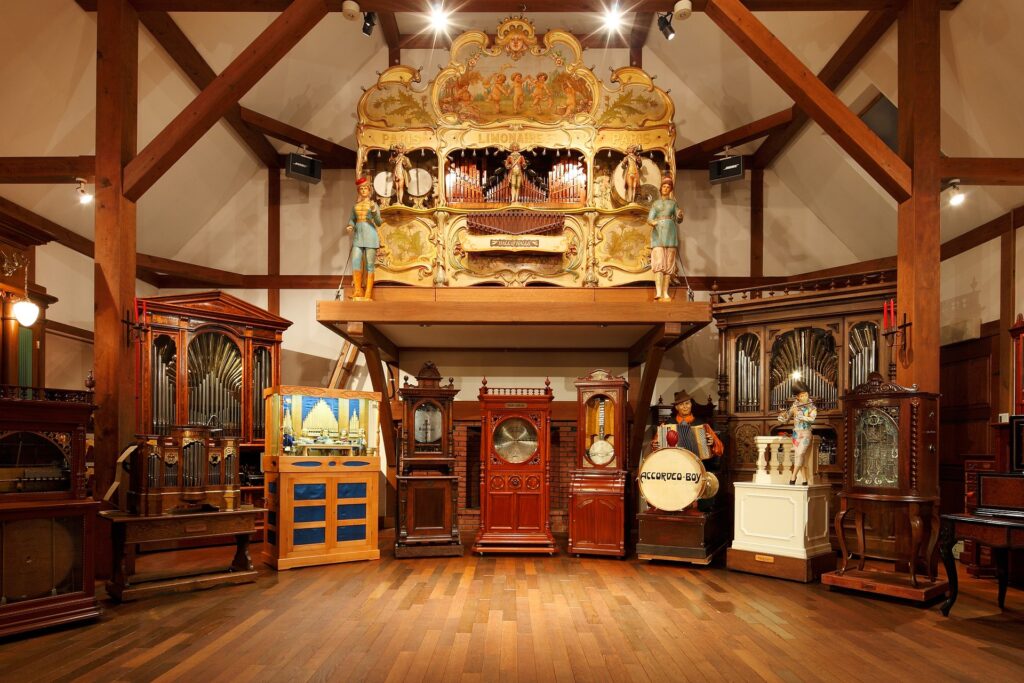
Kiyosato Moeginomura Museum HALL of HALLS
Located in Kiyosato, Yamanashi, Hall of Halls is a museum housing approximately 250 automatic musical instruments from Europe and the United States, primarily from Switzerland and Germany, dating from the late 19th to early 20th centuries.
Its collection includes cylinder and disc music boxes, self-playing organs, pianos, violins, and even automata—representing the pinnacle of technological innovation of their era.
In a time before broadcast media, these instruments brought music directly into people’s lives, forming a unique cultural intersection of music and mechanical engineering.
A defining feature of the museum is that these instruments are not merely displayed, but actually performed, allowing visitors to experience their rich resonance alongside the living presence of history.

Tatsushi Omori
Marimba
Born in Yokosuka, Kanagawa, Japan.
Graduated from Senzoku Gakuen College of Music.
He made his debut in 1999 as part of the marimba and percussion duo Cheer’s.
From 2001, he held five solo marimba recitals sponsored by Tanabe Seiyaku at Ginza Jujiya Hall.
He has performed internationally, including concerts hosted by the Japanese Consulate in Switzerland (2004) and the Royal Academy of Music in the UK (2005).
Between 2003 and 2009, he served as a guest percussionist with the American Wind Symphony Orchestra, participating in world premieres, solo performances, chamber music, and recordings.
With over 200 international performances, his career in Japan includes appearances at major cultural ceremonies, imperial celebrations, and collaborations with orchestras.
As of recent years, his activities span television, radio hosting, and recording for CDs, commercials, and film music.
He has also supported major artists such as SEKAI NO OWARI, Noriyuki Makihara, Chitose Hajime, Sukima Switch, Masayoshi Yamazaki, and KinKi Kids.
His discography includes the world’s first collaboration albums with antique music boxes (UTOPIA, UTOPIA 2) and the marimba–piano duo album Lumière.
official website : tatsushiomori.com
YouTube: “Tatsushi Omori Channel”
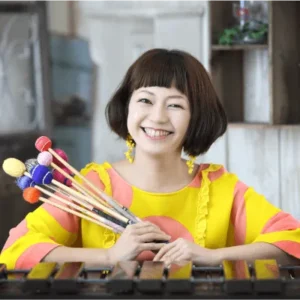
Yoko Kamihara
Marimba
Born in Yamagata City, Japan.
Graduated from Senzoku Gakuen College of Music.
She studied electronic organ under Noriko Nishimura, and percussion and marimba under Junko Kato, Tomoyuki Okada, Mutsuko Fujii, Momoko Kamiya, Takashi Ueno, and Christopher Hardy.
Currently based in Yamagata, she performs across a wide range of genres, including national anthem performances at professional baseball games and appearances in concerts by Noriyuki Makihara.
Her activities extend internationally, with over 200 performances in North America.
In addition to performing, she is active in music education and music therapy.
She is a member of multiple ensembles, including Cheer’s, Paramary, Yamagata Percussion Group, PRO WiND023, Ensemble Bonheur, Trico de Musique, and Let’s. https://www.facebook.com/yoko.kamihara/
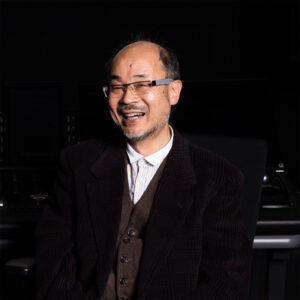
Hideo Irimajiri
(RME Premium Recordings
Music Director/Executive Producer)
Born in 1956. Graduated from the Kyushu Institute of Design’s Department of Acoustic Design in 1979 and graduated from the same school’s graduate program in 1981. Irimajiri acquired a doctorate in reverberation research in 2013 and joined Mainichi Broadcasting System, Inc. in 1981, subsequently working in the Video Technology Department, Audio Technology Department, Hall Technology Department, Post Production Department, and Mastering Department. Since 2017, Irimajiri has worked at WOWOW Inc. on developing technology and business for producing immersive audio. In 2025, Irimajiri started the Irimajiri Immersive Audio Research Lab and established the Naramachi Studio. He is currently the music director at RME Premium Recordings.
In 1987, Irimajiri was involved in developing the broadcast industry’s first high school baseball sound broadcast project. In 2005, Irimajiri also engaged in researching the volume issue in broadcasting, was an ARIB committee member, and worked on standardization as a committee member of the Japan Commercial Broadcasters Association. Irimajiri has worked on sound recording since his school days, focusing particularly on 4-channel recordings and spatial acoustics. He is currently developing technology for 3D audio recordings, while also enthusiastically working on production and promotion activities.
2021: Isao Tomita “The Tale of Genji: Symphonic Fantasy” (Grand Prize Winner of the Japan Professional Music Recording Award)
2021: Bob James “Feel Like Making Live” UHD BD
2024: MR. BIG “The BIG Finish Live” UHD BD
Irimajiri also personally produces his own music under the name Jiro Irima, working on the opening theme for the National High School Rugby Tournament at Hanazono, the PC game Record of Lodoss War, and more.
Recording Information
Recording Dates: Feb 28-29, 2024
Recording Location: Kiyosato Moeginomura Museum HALL of HALLS, Yamanashi Prefecture
Credits
General Producer: Seiji Murai (Synthax Japan)
General Music Director & Recording Engineer: Hideo Irimajiri (Irimajiri Immersive Audio Laboratory)
Album Curation: Sachiko Kawano
Marimba Performance : Tatsushi Omori
Marimba Performance : Yoko Kamihara
Web Producer: Takeshi Mitsuhashi (Onkeisha)
Venue Manager & Marketing Director: Kaori Terasawa (Synthax Japan)
Creative Director: Nao Masaki
Artist Paint: Ayana Mizuno
English Website Production
Producer: Takeshi Mitsuhashi (Onkeisha)
Programmer: Takeshi Mitsuhashi (Onkeisha)
Special Thanks
Joji Funaki, Hideki Matsutake, Kanji Murai (Genelec Japan)
