
Resonscape
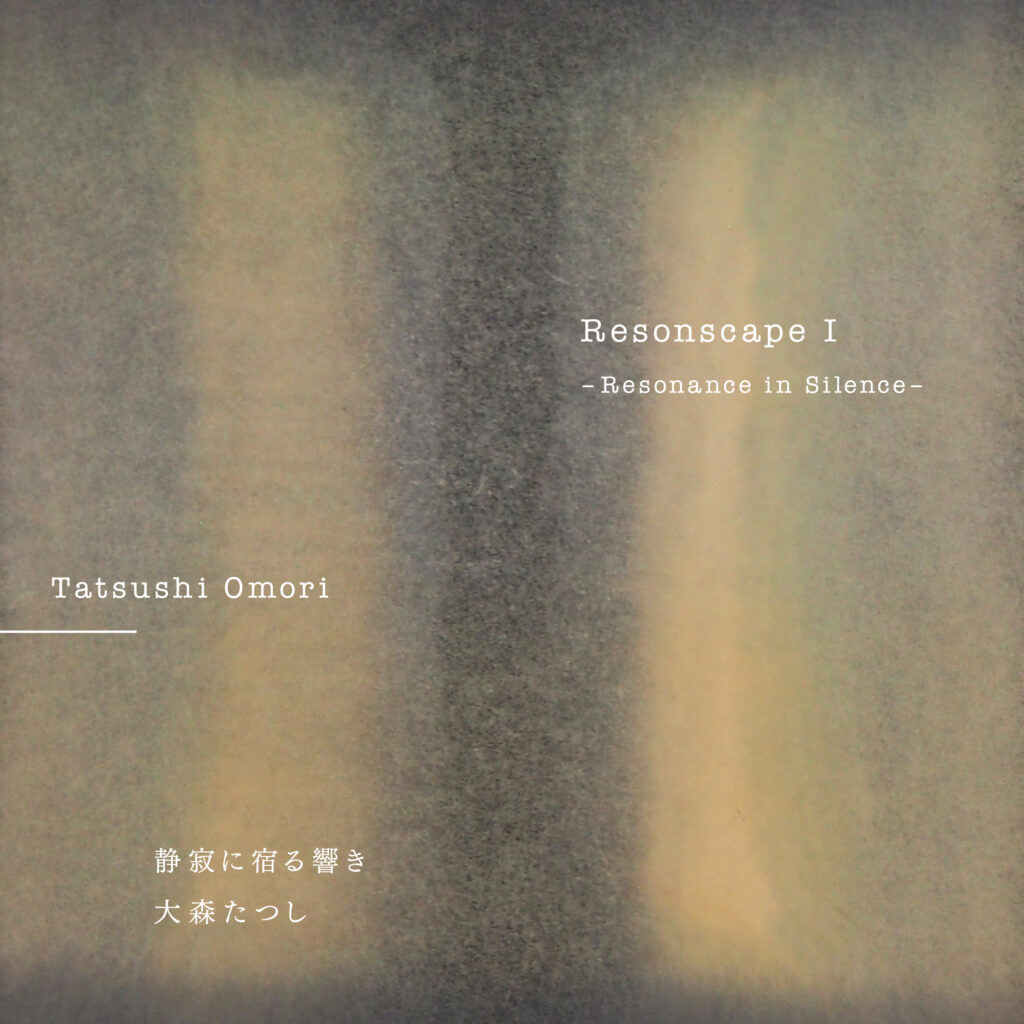
Resonscape I ーResonance in Silence
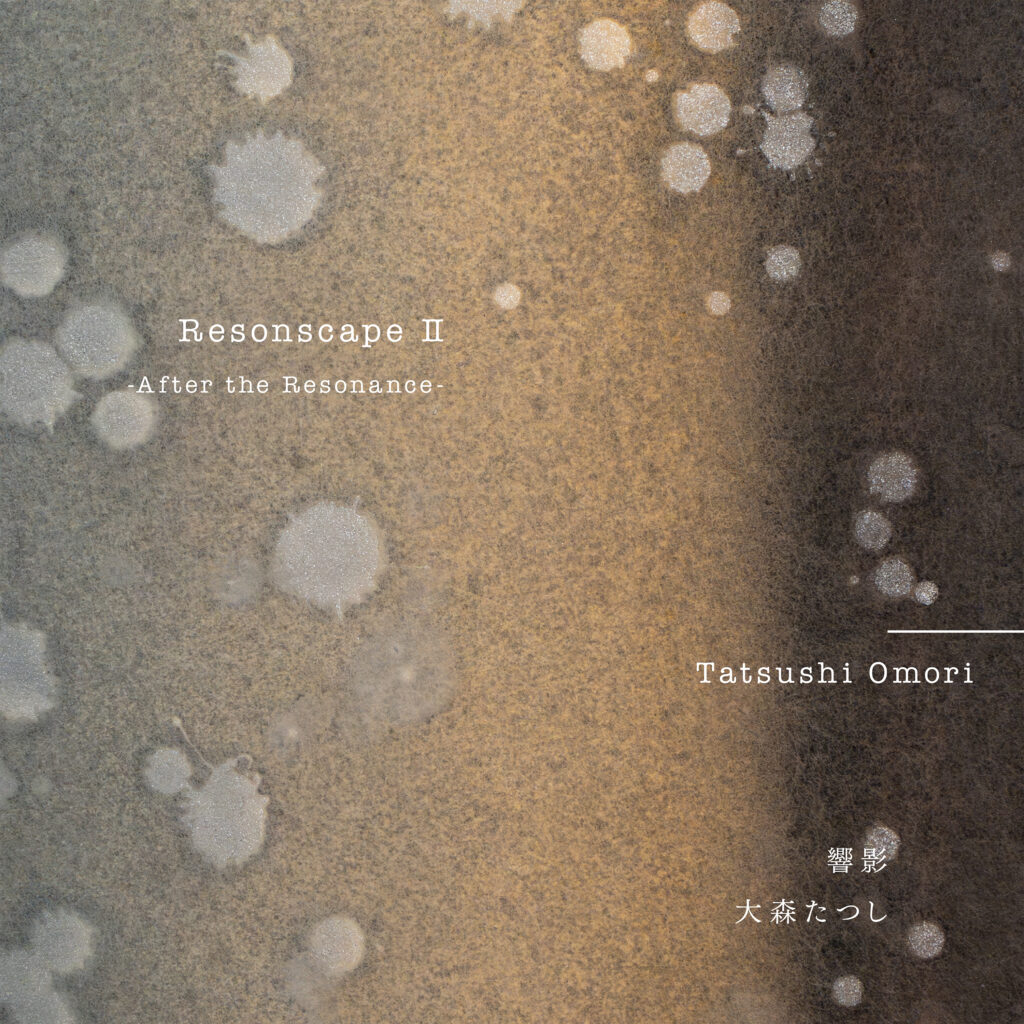
Resonscape II ーAfter the Resonance
Tatsushi Omori
Beyond Resonance.
Resonscape is a series that captures the sound of the marimba not merely as “audio,” but as a landscape.
Born of striking, yet never percussive in character, the marimba’s tone touches space, expands, and gradually dissolves into silence.
This entire process is captured through an ultra–high-resolution spatial recording system.
In “Resonscape I — Resonance in Silence,”
we observe the passage of resonance returning to stillness.
In “Resonscape II — After the Resonance,”
we listen closely to the air and presence that remain after the sound has faded.
When performance, space, and recording become inseparable,
music ceases to be an event and instead becomes a continuing presence — a landscape that simply exists.
Resonscape is a quiet series that reexamines the very act of listening.
Recording Space & Performance
This project consists of two paired albums, each recorded in a different acoustic environment.
In both recordings, an ultra–high-resolution spatial audio system was employed to capture not only the sound itself, but also the time and presence of sound as it emerges, interacts with space, and fades away.
The aim was neither to record sound “loudly” nor to artificially enhance its beauty.
Rather, the intention was to document the process itself—
the interaction between sound and space—as music.
After the final note fades,
a slightly different kind of silence arrives.
It is not mere silence, but something like a trace left behind by time that has passed through sound.
In “Resonscape II — After the Resonance,”
what we follow is not the moment sound occurs,
but the process by which it completes its role.
As resonance disappears, it quietly leaves its shape within the listener’s awareness.
If this album can leave you lingering in attentive silence,
even for just a moment after the music ends,
it would be our greatest pleasure.
— Tatsushi Omori
Resonscape
Tatsushi Omori
Date and Location of Recording: May 16-19, 2024, in Yatsugatake Yamabiko Hall
Stereo and Dolby Atmos versions of this collection can be enjoyed on all types of music subscription services.
*Services that provide this collection are subject to change at the distributor’s discretion.
Resonscape I ーResonance in Silence
This album was recorded at Yatsugatake Yamabiko Hall, Hokuto City, Yamanashi Prefecture.
The hall’s acoustics allow sound to naturally expand into the distance from the very moment it is born,
with long, soft reverberation that gently dissolves into space.
Through high-resolution spatial recording, the marimba’s sound is placed quietly within layers of air, without exaggerating its contours.
In performance, the focus was placed not only on the sounding moment,
but on the process by which the sound fades.
This is a space where resonance itself returns to silence—and can be heard as music.
Track List
| 1 | Hymn | Karl Jenkins |
| 2 | Rhythm Song | Paul Smadbeck |
| 3 | Amazing Grace | Anonymous |
| 4 | Tanti Anni Prima | Astor Piazzolla |
| 5 | Spiegel im Spiegel | Arvo Pärt |
 Listen on Apple Music
 Listen on Amazon Music
 Listen on Spotify
 Listen on YouTube Music
Performed by Tatsushi Omori (marimba) and Mana Fukui (piano, Tracks 3–5)
Resonscape II ― After the Resonance
This album was recorded at Kiyosato Moeginomura Museum HALL of HALLS, Yamanashi Prefecture.
In this space, sound emerges more closely and with greater physical presence.
Elements such as attack, overtones, and decay are clearly defined, and subtle differences in touch and timing appear directly as musical expression.
The high-resolution recording system captures not only the fine details of performance,
but also the air and tension that exist between sounds.
For this reason, the performance does not rely on reverberation.
Instead, silence and spacing are shaped intentionally by the performer.
What remains after resonance—
that lingering presence—
lies at the heart of this album.
Track List
| 1 | Land | Takatsugu Muramatsu |
| 2 | Deux Arabesques, L. 66: No. 1, Andantino con moto | Claude Debussy |
| 3 | Wooden Music | Rich O’Meara |
| 4 | Sleep | Eric Whitacre |
Performed by Tatsushi Omori (marimba) and Yoko Kamihara (marimba, Tracks 2–4)
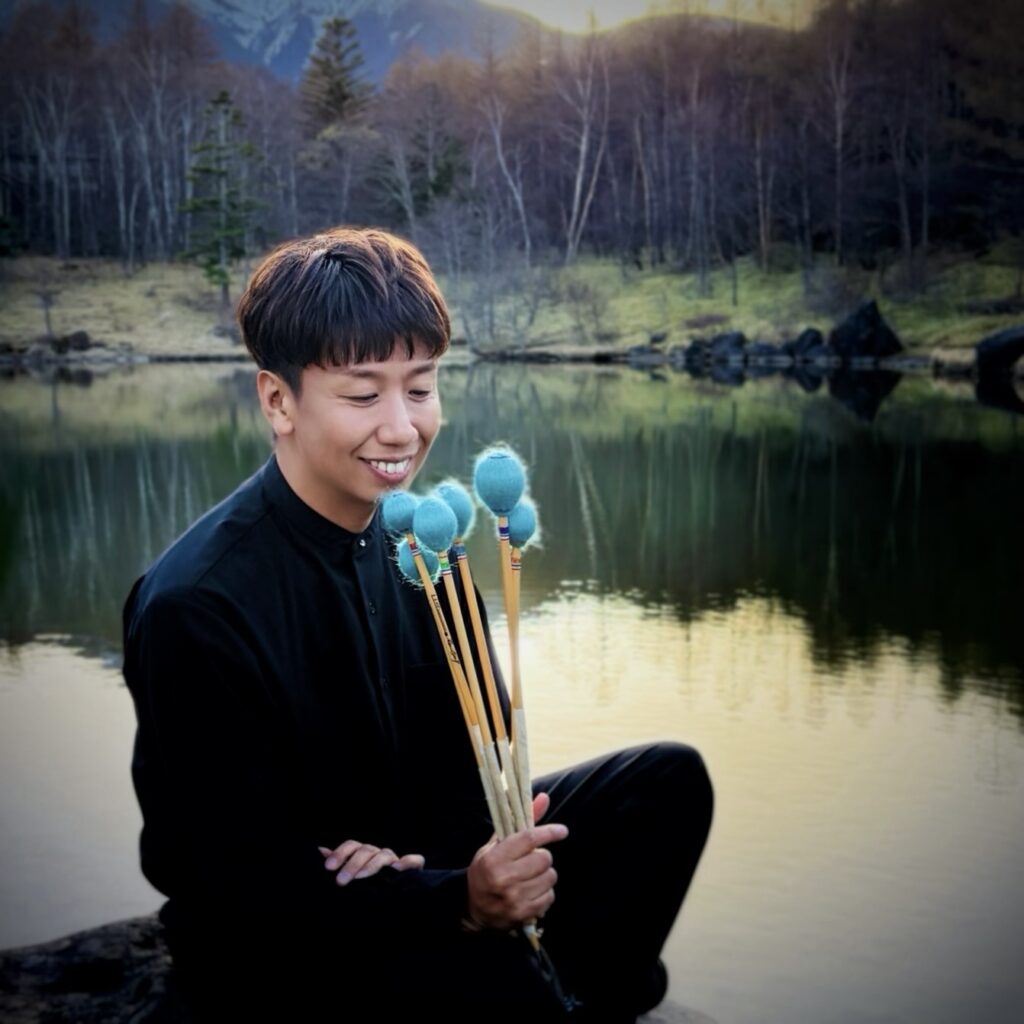
Tatsushi Omori
(Marimba)
Born in Yokosuka, Kanagawa, Japan.
Graduated from Senzoku Gakuen College of Music.
He made his debut in 1999 as part of the marimba and percussion duo Cheer’s.
From 2001, he held five solo marimba recitals sponsored by Tanabe Seiyaku at Ginza Jujiya Hall.
He has performed internationally, including concerts hosted by the Japanese Consulate in Switzerland (2004) and the Royal Academy of Music in the UK (2005).
Between 2003 and 2009, he served as a guest percussionist with the American Wind Symphony Orchestra, participating in world premieres, solo performances, chamber music, and recordings.
With over 200 international performances, his career in Japan includes appearances at major cultural ceremonies, imperial celebrations, and collaborations with orchestras.
As of recent years, his activities span television, radio hosting, and recording for CDs, commercials, and film music.
He has also supported major artists such as SEKAI NO OWARI, Noriyuki Makihara, Chitose Hajime, Sukima Switch, Masayoshi Yamazaki, and KinKi Kids.
His discography includes the world’s first collaboration albums with antique music boxes (UTOPIA, UTOPIA 2) and the marimba–piano duo album Lumière.
official website : tatsushiomori.com
YouTube: “Tatsushi Omori Channel”
Hideo Irimajiri
RME Premium Recordings
Music Director/Executive Producer
Born in 1956. Graduated from the Kyushu Institute of Design’s Department of Acoustic Design in 1979 and graduated from the same school’s graduate program in 1981. Irimajiri acquired a doctorate in reverberation research in 2013 and joined Mainichi Broadcasting System, Inc. in 1981, subsequently working in the Video Technology Department, Audio Technology Department, Hall Technology Department, Post Production Department, and Mastering Department. Since 2017, Irimajiri has worked at WOWOW Inc. on developing technology and business for producing immersive audio. In 2025, Irimajiri started the Irimajiri Immersive Audio Research Lab and established the Naramachi Studio. He is currently the music director at RME Premium Recordings.
In 1987, Irimajiri was involved in developing the broadcast industry’s first high school baseball sound broadcast project. In 2005, Irimajiri also engaged in researching the volume issue in broadcasting, was an ARIB committee member, and worked on standardization as a committee member of the Japan Commercial Broadcasters Association. Irimajiri has worked on sound recording since his school days, focusing particularly on 4-channel recordings and spatial acoustics. He is currently developing technology for 3D audio recordings, while also enthusiastically working on production and promotion activities.
2021: Isao Tomita “The Tale of Genji: Symphonic Fantasy” (Grand Prize Winner of the Japan Professional Music Recording Award)
2021: Bob James “Feel Like Making Live” UHD BD
2024: MR. BIG “The BIG Finish Live” UHD BD
Irimajiri also personally produces his own music under the name Jiro Irima, working on the opening theme for the National High School Rugby Tournament at Hanazono, the PC game Record of Lodoss War, and more.
Recording Information
Recording Dates: May 16–19, 2024
Recording Location for Resonscape I: Yatsugatake Yamabiko Hall, Hokuto City, Yamanashi Prefecture
Recording Location for Resonscape II: Kiyosato Moeginomura Museum HALL of HALLS, Yamanashi Prefecture
Credits
General Producer: Seiji Murai (Synthax Japan)
General Music Director & Recording Engineer: Hideo Irimajiri (Irimajiri Immersive Audio Laboratory)
Marimba Performance & Album Curation: Tatsushi Omori
Piano Performance : Mana Fukui
Marimba Performance : Yoko Kamihara
Bösendorfer Tuning: Jun Terunuma
Web Producer: Takeshi Mitsuhashi (Onkeisha)
Venue Manager & Marketing Director: Kaori Terasawa (Synthax Japan)
Creative Director: Nao Masaki
Artist Paint: Ayana Mizuno
English Website Production
Producer: Takeshi Mitsuhashi (Onkeisha)
Programmer: Takeshi Mitsuhashi (Onkeisha)
Special Thanks
Joji Funaki, Sachiko Kawano, Kanji Murai (Genelec Japan)
