
Engineer’s Note
Nostalgie du Futur ” Le Japonisme”
Vicariously Experiencing the Piano’s Reverberations: Recording Technology for Nostalgia of the Future – Japonism
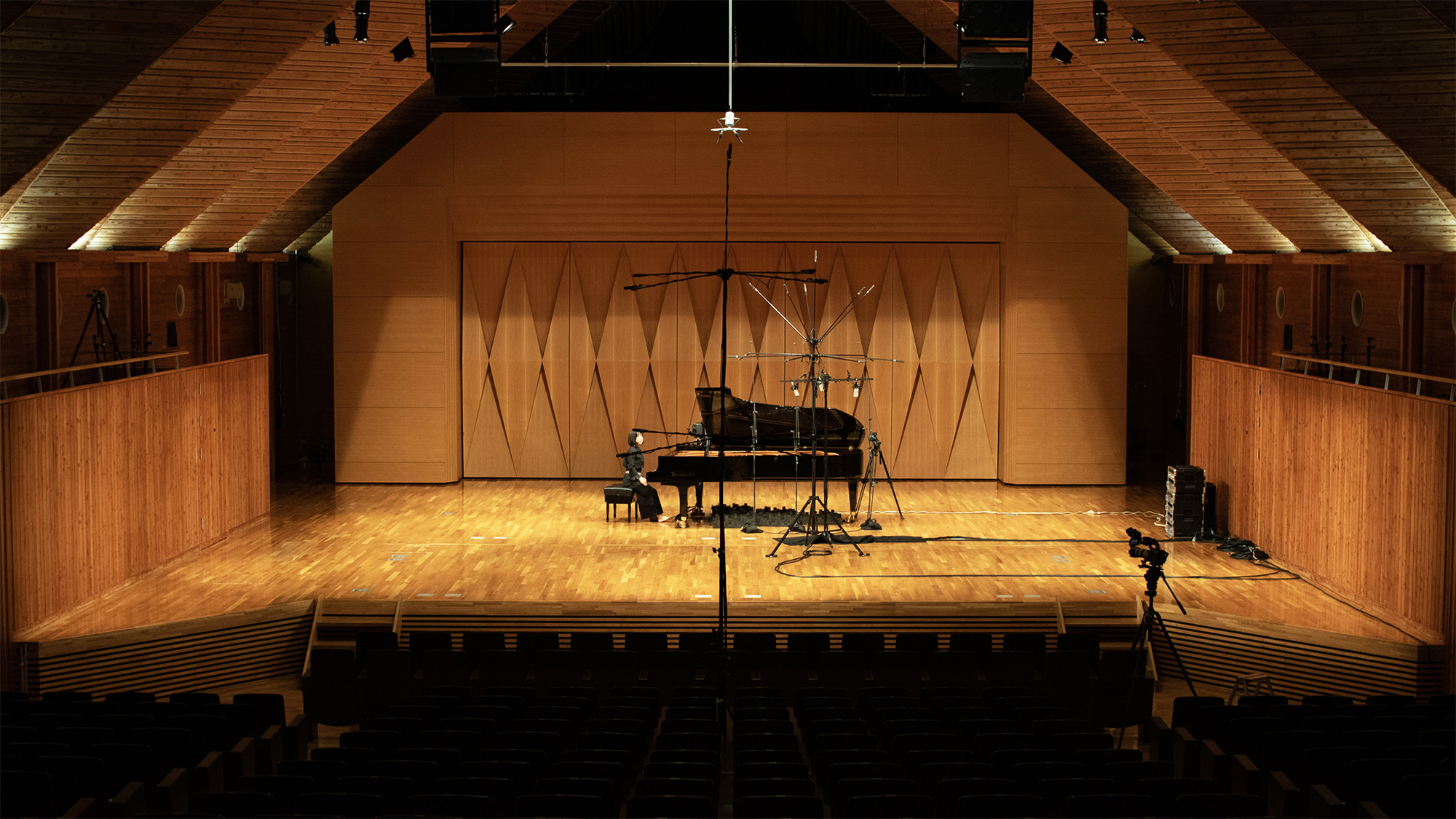
The 3D audio recording of Pianist Mana Fukui’s solo piano performance, Nostalgia of the Future – Japonism, was released by RME Premium Recordings.
This recording is composed of three parts: Vol. 1 – Japonism, Vol. 2 – The Orient and Japan, and Vol. 3 – A Collection of Little Masterpieces. This venture uses Ms. Fukui’s performance to take the West’s late 19th-century “Japonism,”—their adoration and projection of Oriental culture—and reconstruct it from a modern perspective to bring it to the future.
The Paris Expositions were a chance to introduce the Japanese arts, which left a deep impression on composers like Debussy and Ravel, as well as many other Western artists. During the time of Art Nouveau, which flourished under the Japonism trend, avant-garde artists ran their imaginations about the Orient they had yet to see, dreaming of the future while giving birth to their works.
In this recording, pieces that were born in the Past are performed in the Present, and sent to the Future by recording with state-of-the-art recording technology. This is a collection that connects time and space.
RME’s Recording Philosophy to Capture Expression to Its Limits
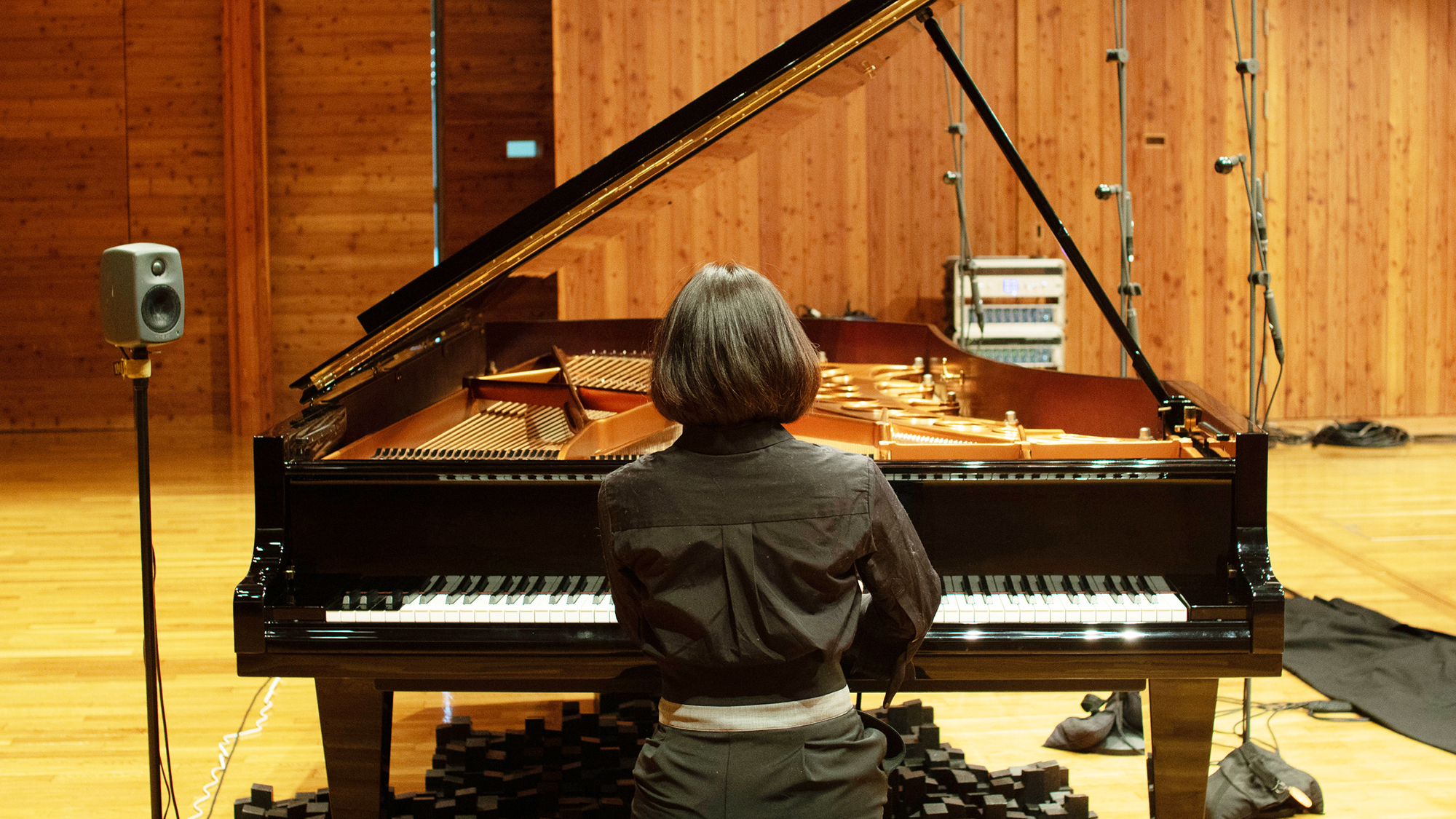
Ms. Fukui’s performance features a sensitive touch that conveys even the vibrations in the air, pedalwork in which even the reverberations become part of the music, and low-note expressions that have the power of a storm. She has deeply internalized each piece and interpreted them from her own perspective, giving us a fresh look at Japonism as a modern-day musician.
At Synthax Japan, we established the music label RME Premium Recordings in 2013 to supply actual high-res content of at least 24-bit/96kHz, even catching the performance venue’s atmosphere on the recording. At our level, we use equipment produced by RME to provide a recording that not only captures in great detail what the performer expresses, but even the echoes and reverberations in the recording space.
In this recording as well, we have stuck to our principles, successfully capturing audio of Ms. Fukui’s musical expressions to their fullest extent.
The Recording System
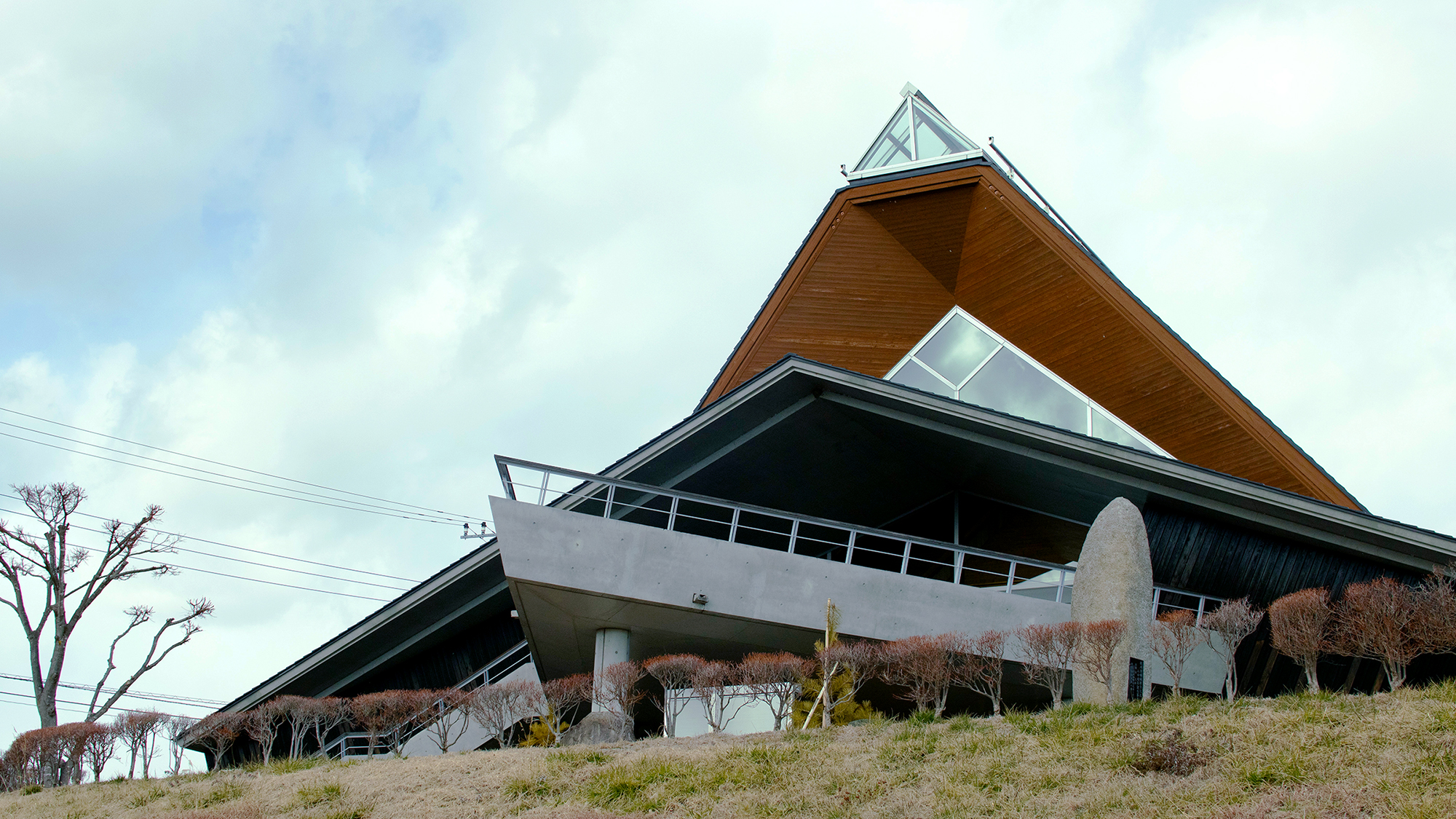
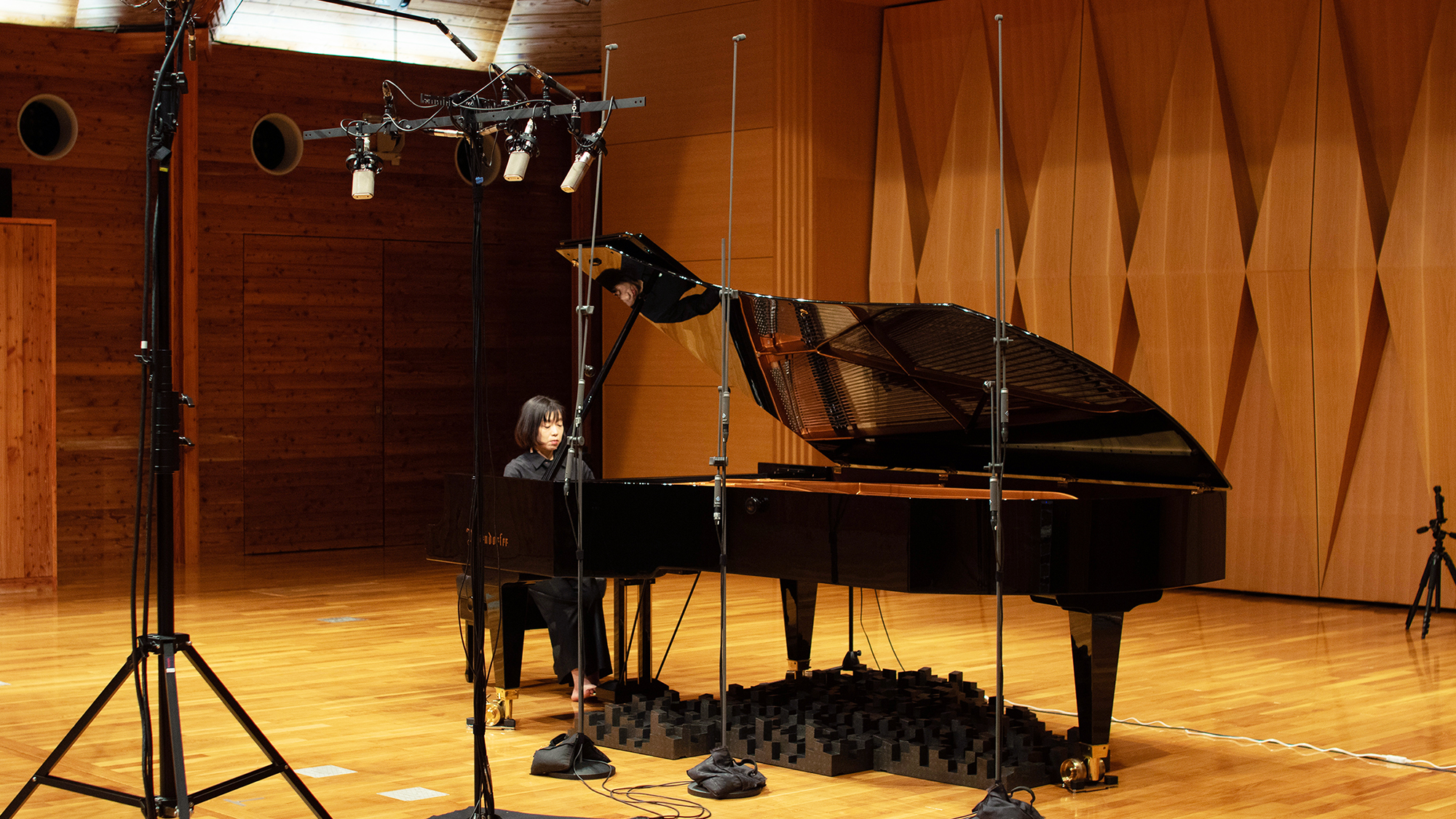
Nostalgia of the Future – Japonism was recorded at Yatsugatake Yamabiko Hall in Hokuto City, Yamanashi, from January 11 to January 14, 2024, and May 16 to May 19, 2024.
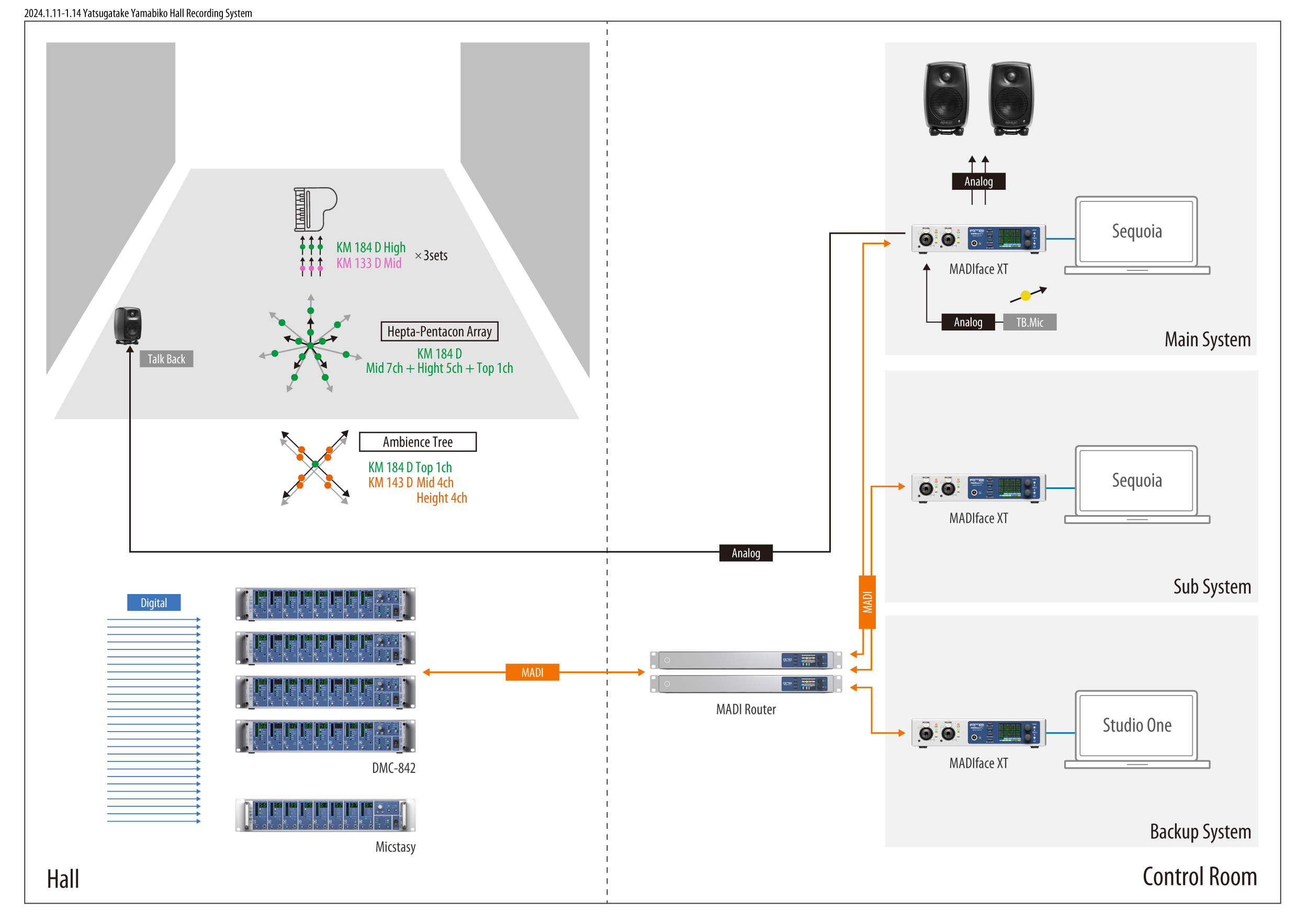
This collection was recorded as 192kHz/24-bit high-resolution audio and produced as 3D audio. The recording used 28 digital microphones, with microphone preamplifiers and audio interfaces using MADI connectivity.
The next section will introduce the structure of the recording system used while recording a majority of the collection in January 2024.
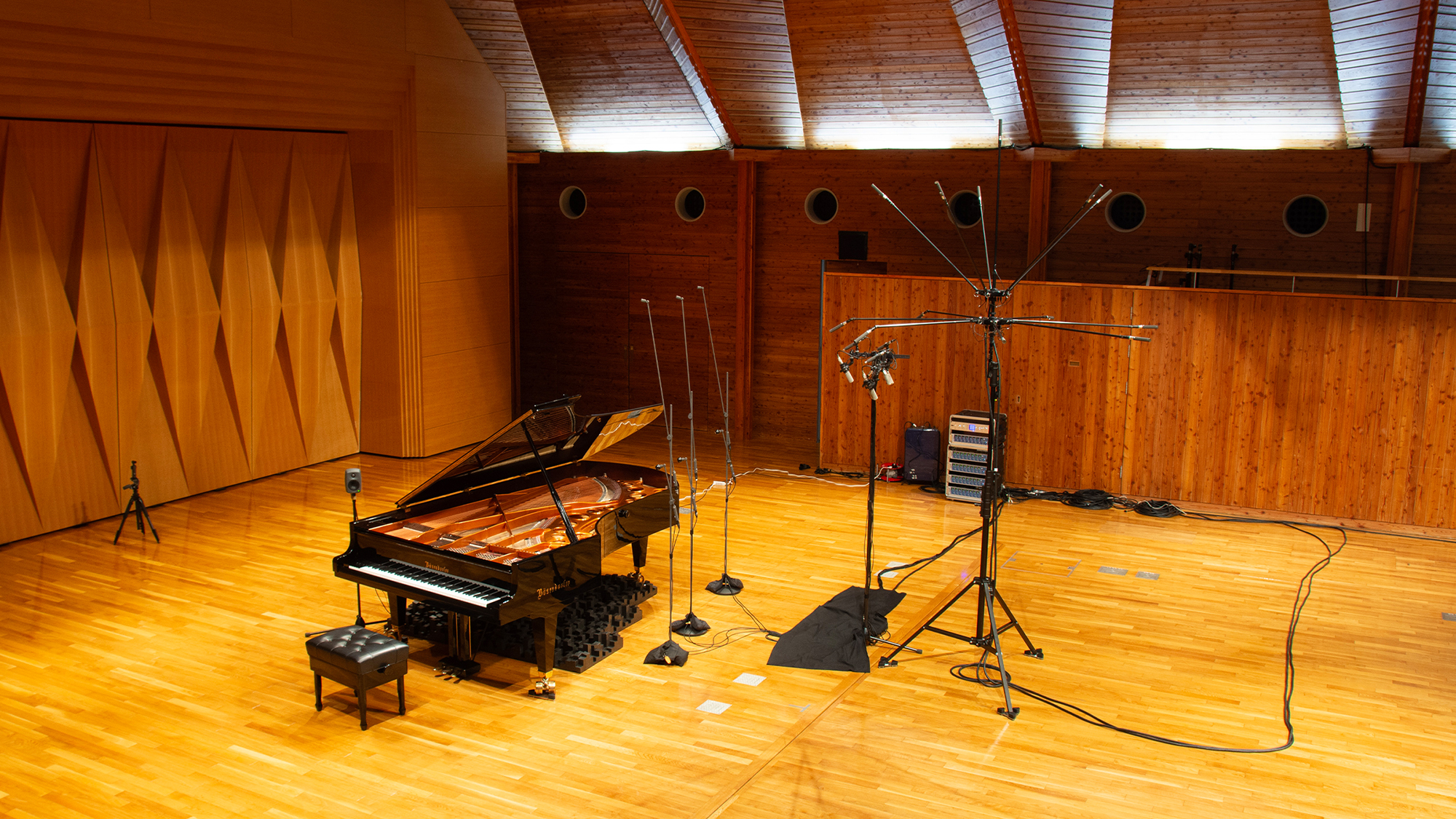
The Hall
Using the Newly Developed Mic Array: the Hepta-Pentagon Array
This recording used a 3D audio recording mic array called the Hepta-Pentagon Array, newly developed by the music director and executive producer, Hideo Irimajiri.
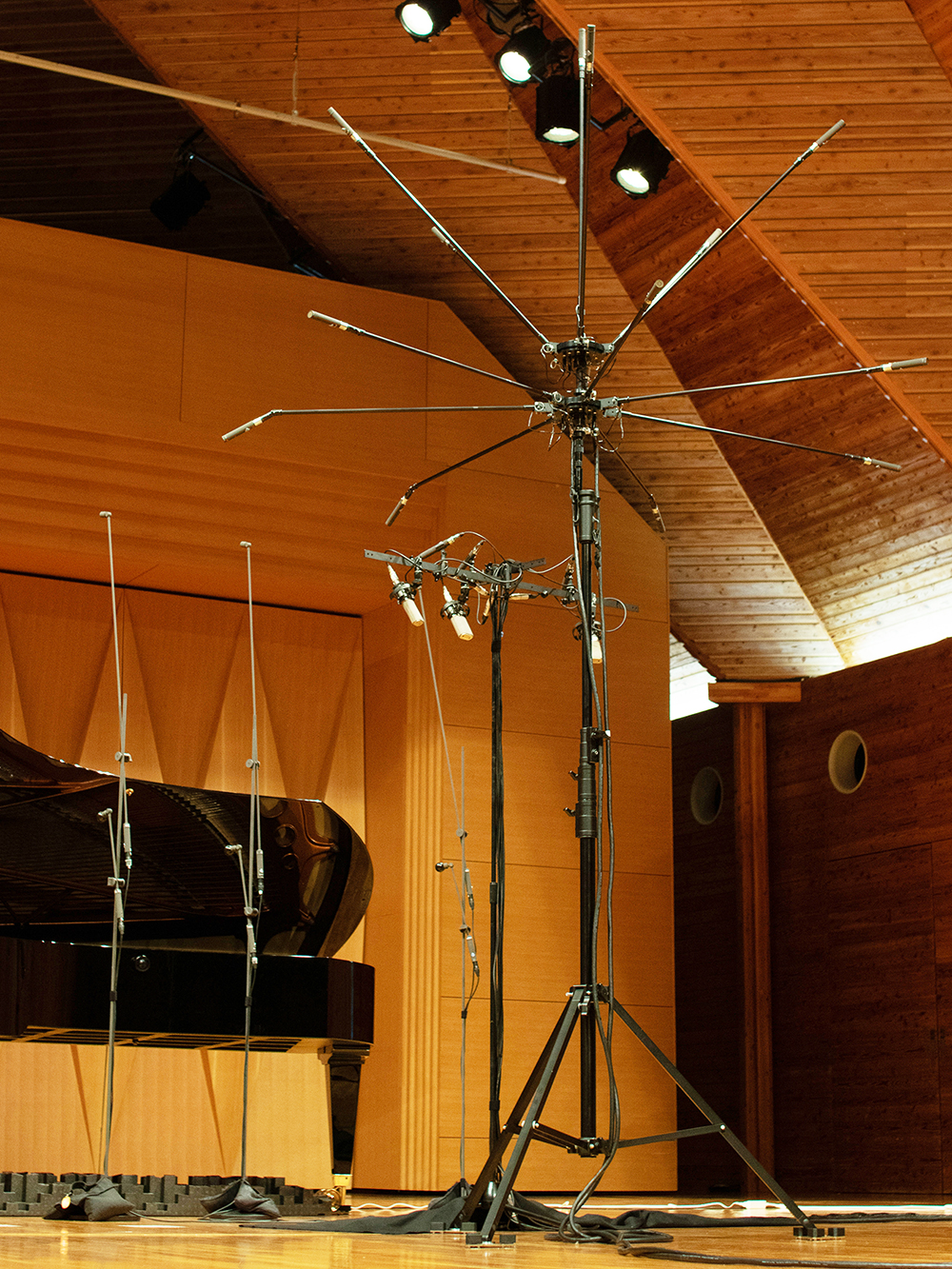
During Irimajiri’s experience in recording 3D audio, he discovered that favorable recording results could be achieved if the microphones were all equidistant in the main mic array. Focusing on the 7 mid-layer channels and 5 high-layer channels, which are required when working with Auro-3D with a 13.1-channel system specification, Irimajiri developed a Hepta-Pentagon Array in which microphones could be placed at the vertices of an exact heptagon and an exact pentagon.
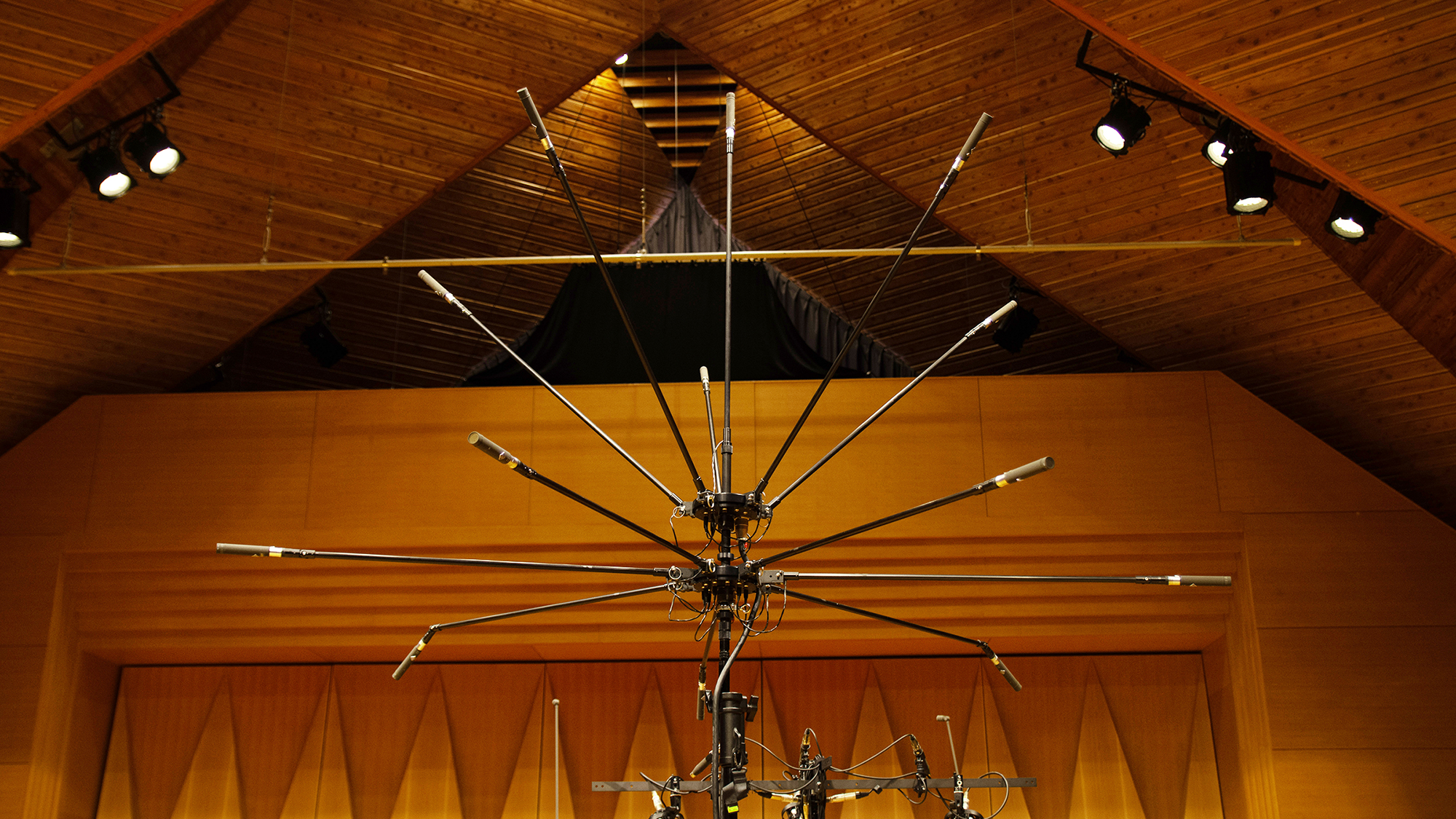
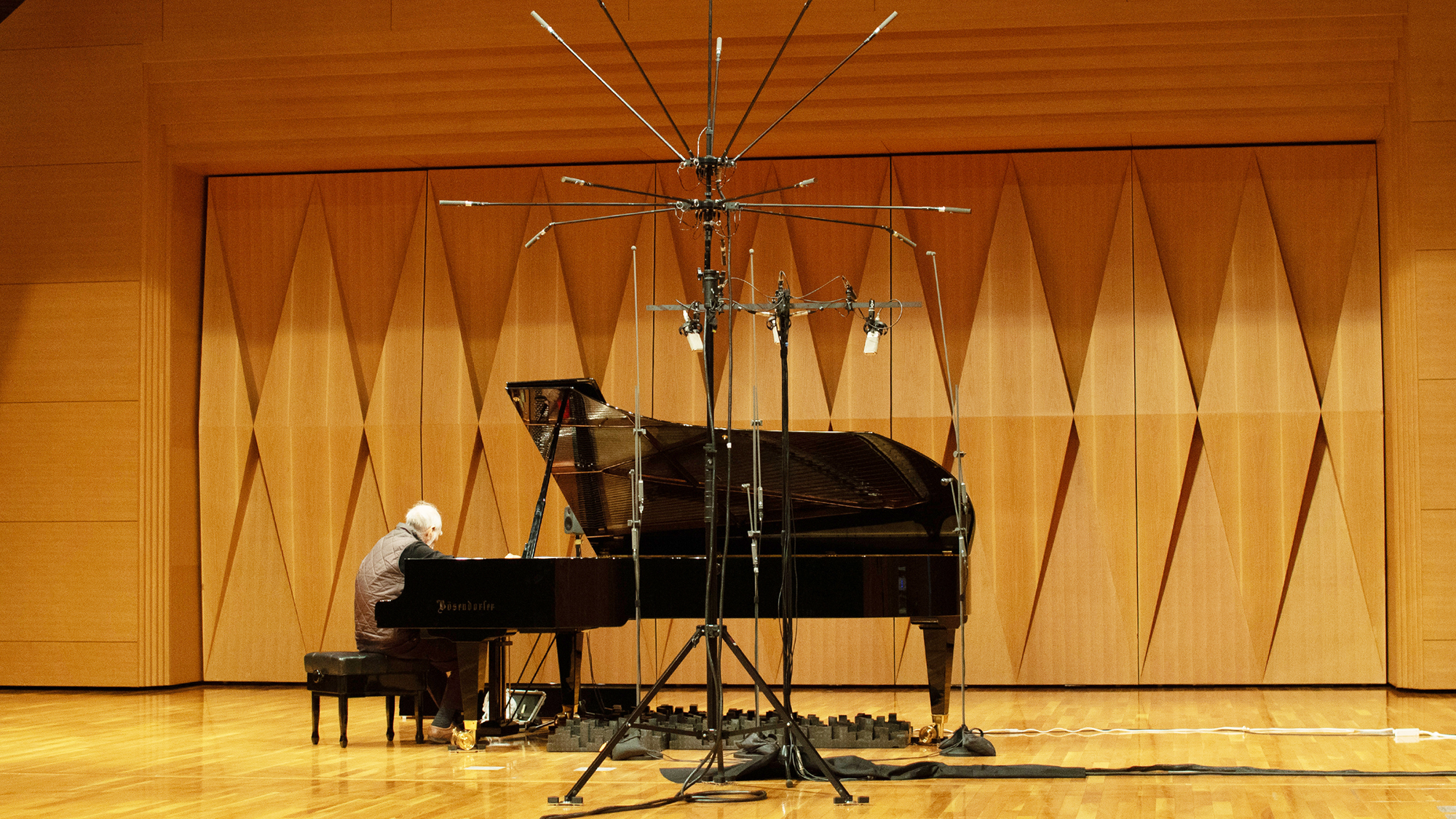
As shown in the photo above, this system attaches a single unidirectional microphone to the end of each of the 13 supports radially extending from the array’s base. The horizontal supports are for the mid-layer microphones. If you look from above, they form line segments between the vertices of the exact hexagon and the center. The next layer is for the high-layer mics, and the supports are pointing upward at a 45-degree angle. However, if you look from above, they form line segments between the vertices of the exact pentagon and the center. At the very top layer, there is a support pointing straight upwards. With this structure, the 13 microphones attached at the tips will match the 13.1-channel Auro-3D specifications.
The mics are equidistant from all other mics at a distance of 1 meter in this 3-layer structure, which means the phantom image appearing between any two points will happen under identical conditions. Also, based on this point-symmetric arrangement, regardless of where the sound arrives from, the amount it bleeds into other mics other than its main two mics will match this point symmetry. Based on these features, the sound field’s balance will be difficult to disrupt in regards to spatial playback, achieving a 3D audio recording that feels natural and as if you were actually there.
To record the hall reverberations on stage, an ambience tree was installed. This consists of two mic arrays stacked on top of each other. The mic arrays are larger versions of IRT crosses, called Omni Crosses.
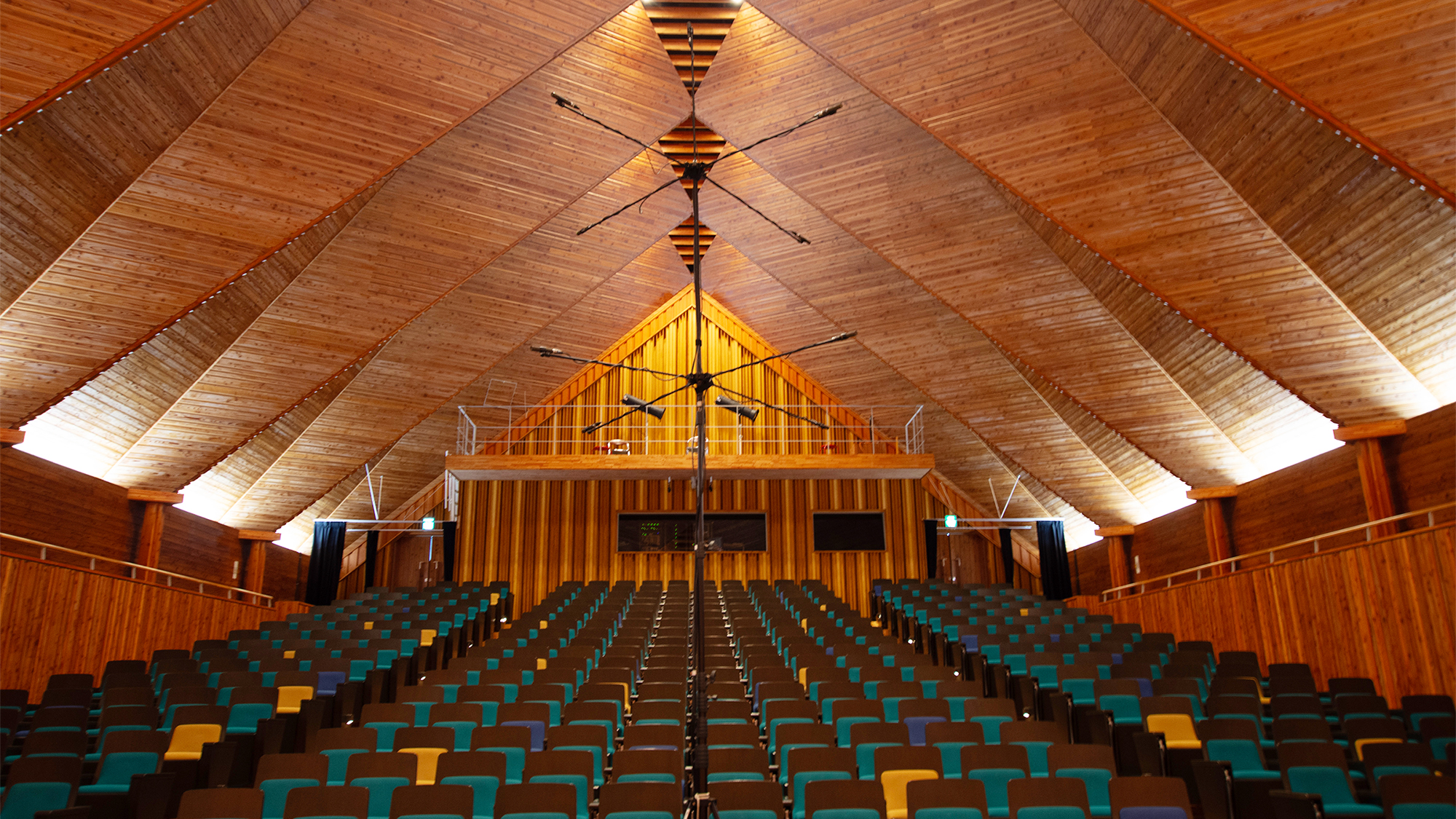
The single top-layer channel is a Neumann KM D 184, while the 4 channels in the middle layer and upper layer are KM D143 microphones.
The microphones on the lower-layer Omni Cross are each connected to one of four middle-layer channels: Ls, Rs, Lb, and Rb. The upper-layer microphones are each connected to HL, HR, HLs, or HRs. The top-layer microphone is connected to another channel.
The Omni Cross was given its name because it uses four omnidirectional microphones, but this recording used wide cardioid microphones.
For picking up the piano sounds, three sets of microphones were used.
The middle layer used Neumann KM D 133s, and the upper layer used Neumann KM D 184s. By using these six microphones to capture the piano’s sound, the piano is expressed not as points or lines, but rather as a sound image surface. This sound image surface allows the recording to express sound from the piano’s perspective.
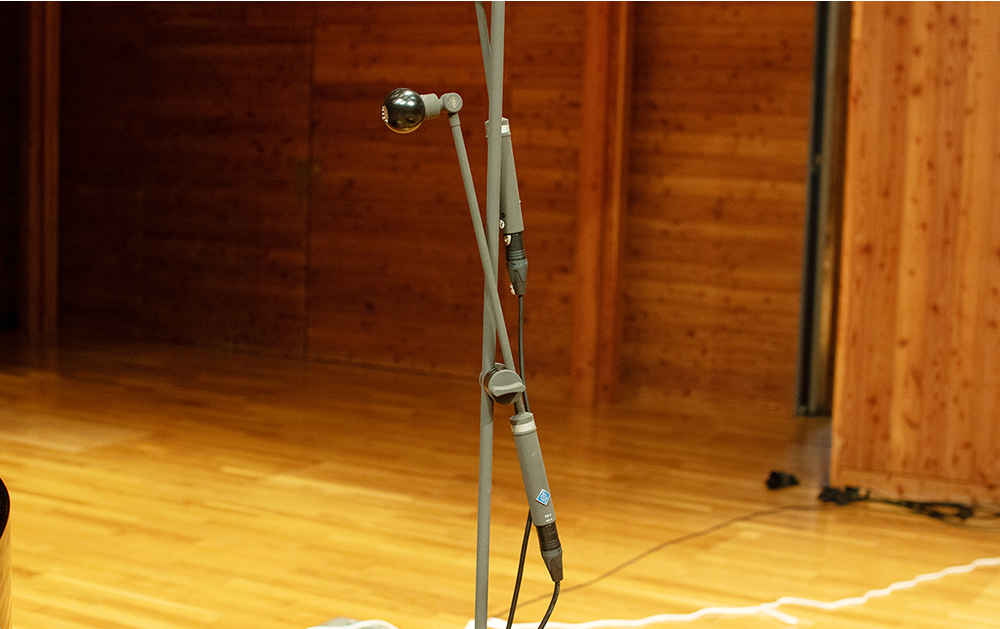
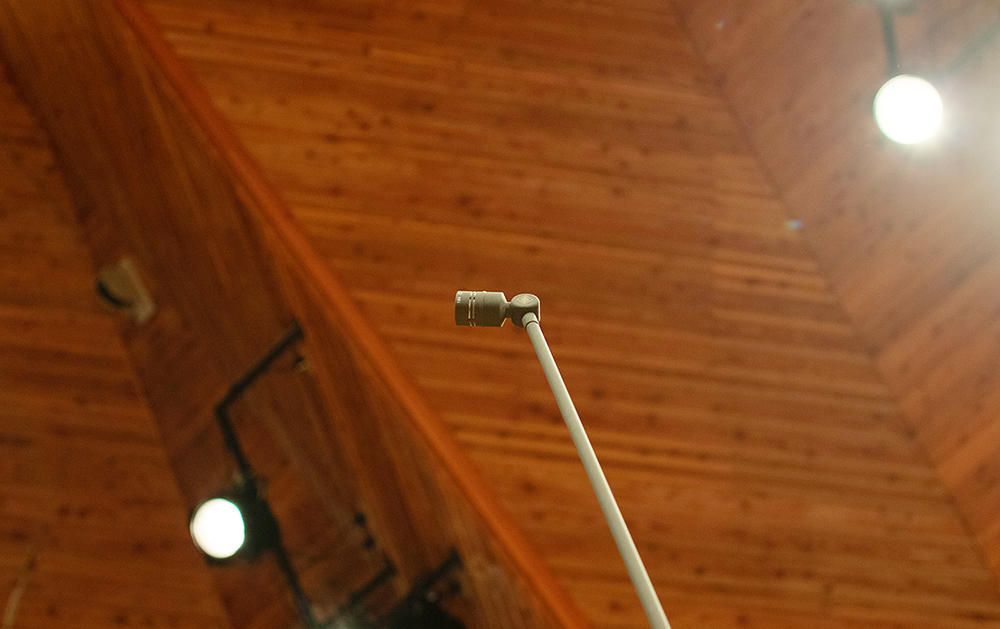
Microphone Preamplifier: RME DMC-842
This recording uses digital microphones, and thus a microphone preamplifier equipped with digital microphone inputs was required: the DMC-842 M. The audio signals, instantly converted to digital input inside the digital microphone, are transmitted via MADI to the control room installed in the hall’s backstage area. This minimizes the quality degradation that would happen in long analog wires to the fullest extent possible.
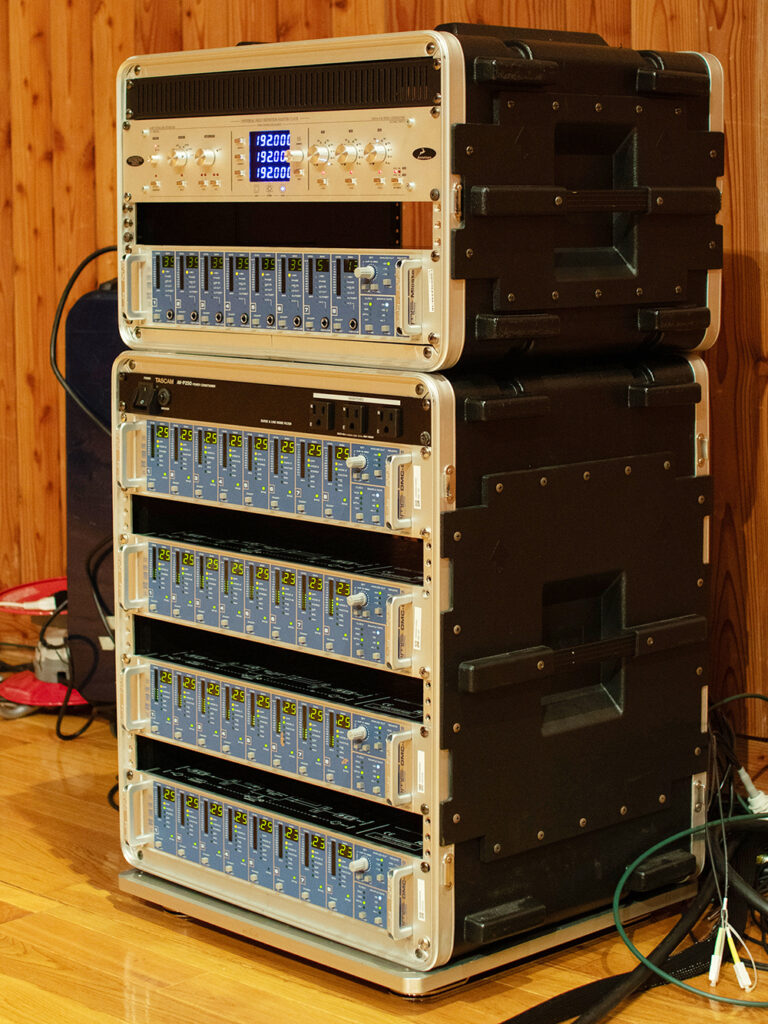
The audio signals sent to the control room’s MADIface XT were recorded through Sequoia on both the main system and subsystem.
Furthermore, the large microphones in the photo were set up to record stereo audio through the mini Decca tree, a three-microphone system. However, upon inspection of the audio, the stereo-mixed source audio from the Hepta-Pentagon Array felt far more realistic. Thus, we decided against using the mini Decca tree in the end.
Control Room
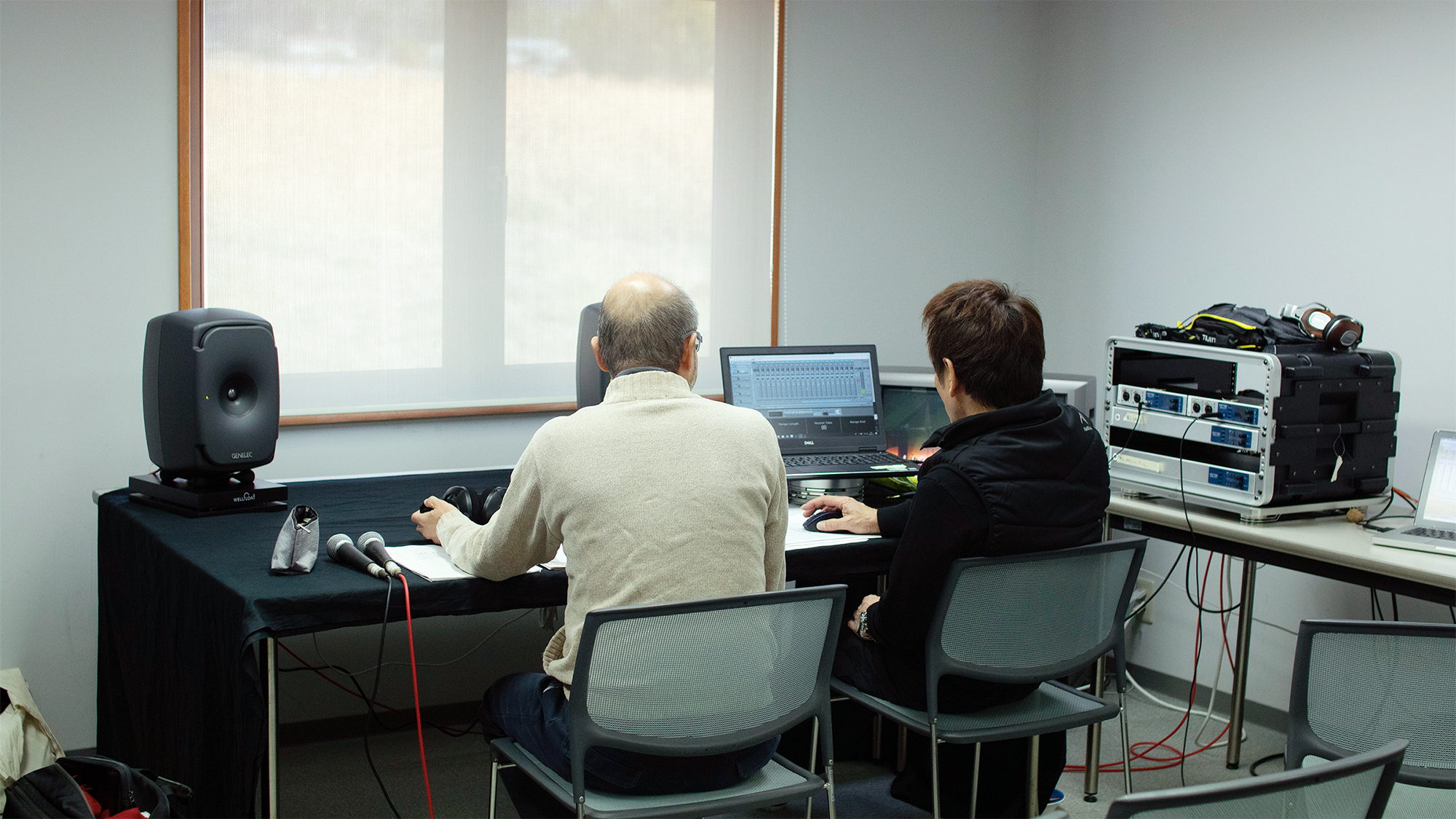
Routing: RME MADI Router
Audio Interface: RME MADIface XT
The audio signals sent from the stage’s microphone preamplifier were sent through MADI and collected into two MADI Routers, after which they were distributed to the audio interface (MADIface XT) of both the main system and subsystem.
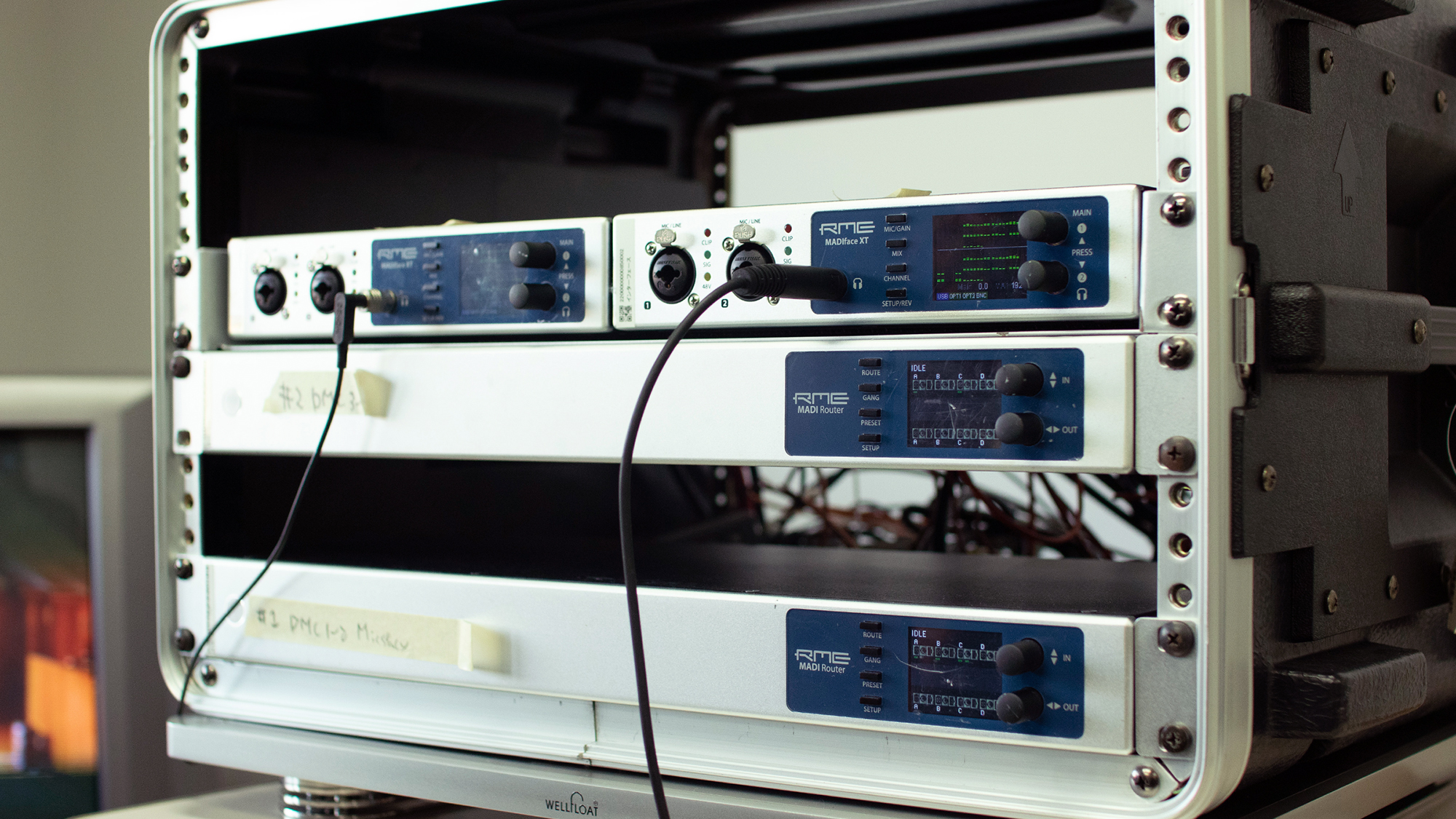
Routing (below): RME MADI Router
DAW Software: MAGIX Sequoia 15
This recording used the DAW software MAGIX Sequoia 15. This DAW has proven results from high-grade production sites, including for classical music. It is used at many recording venues, mainly in Germany, in conjunction with RME products.
This time, as both a test trial and backup system, we used Studio One to simultaneously record the signals sent out by the subsystem, MADIface XT.
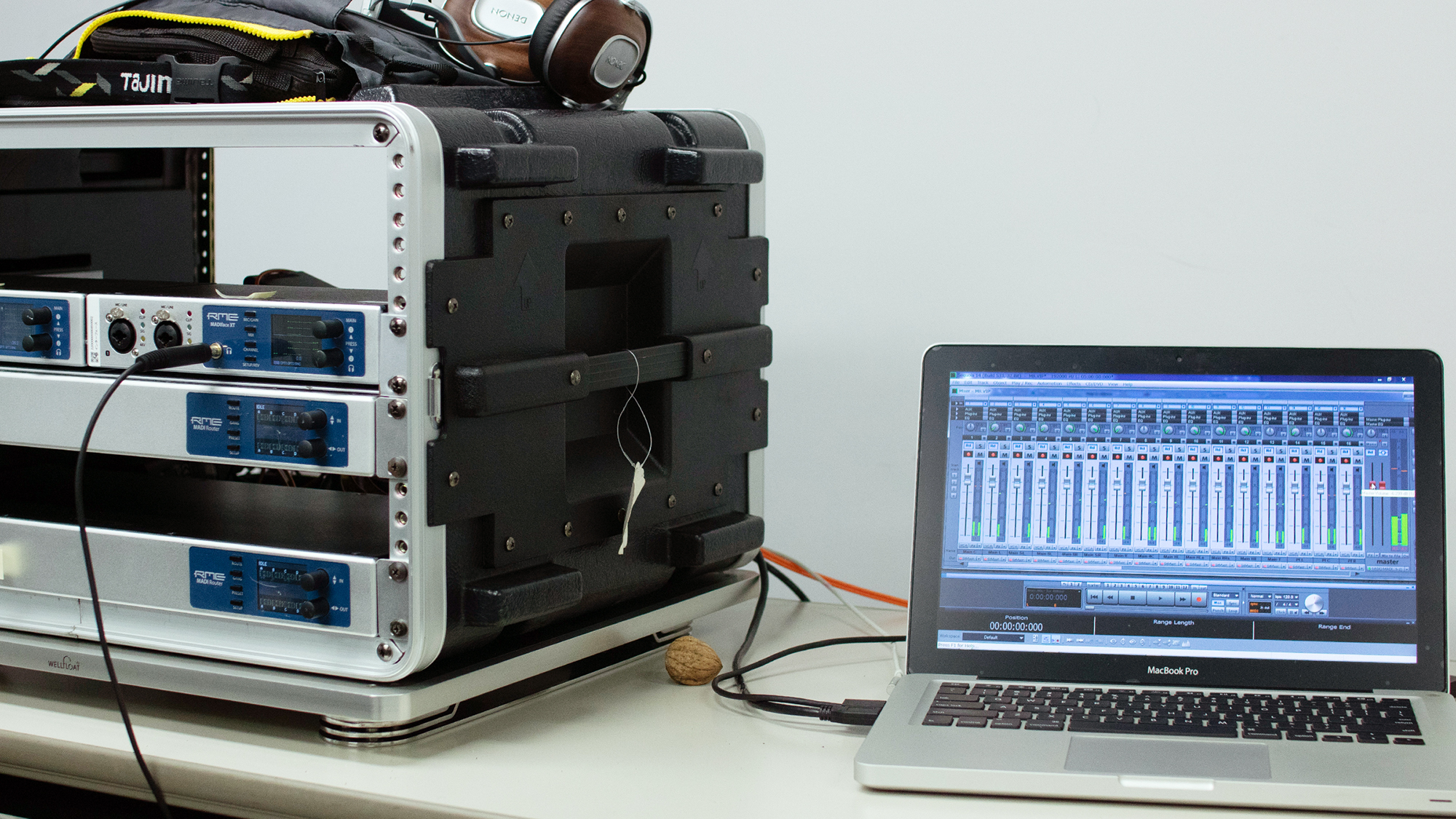
DAW Software: MAGIX SEQUOIA 13
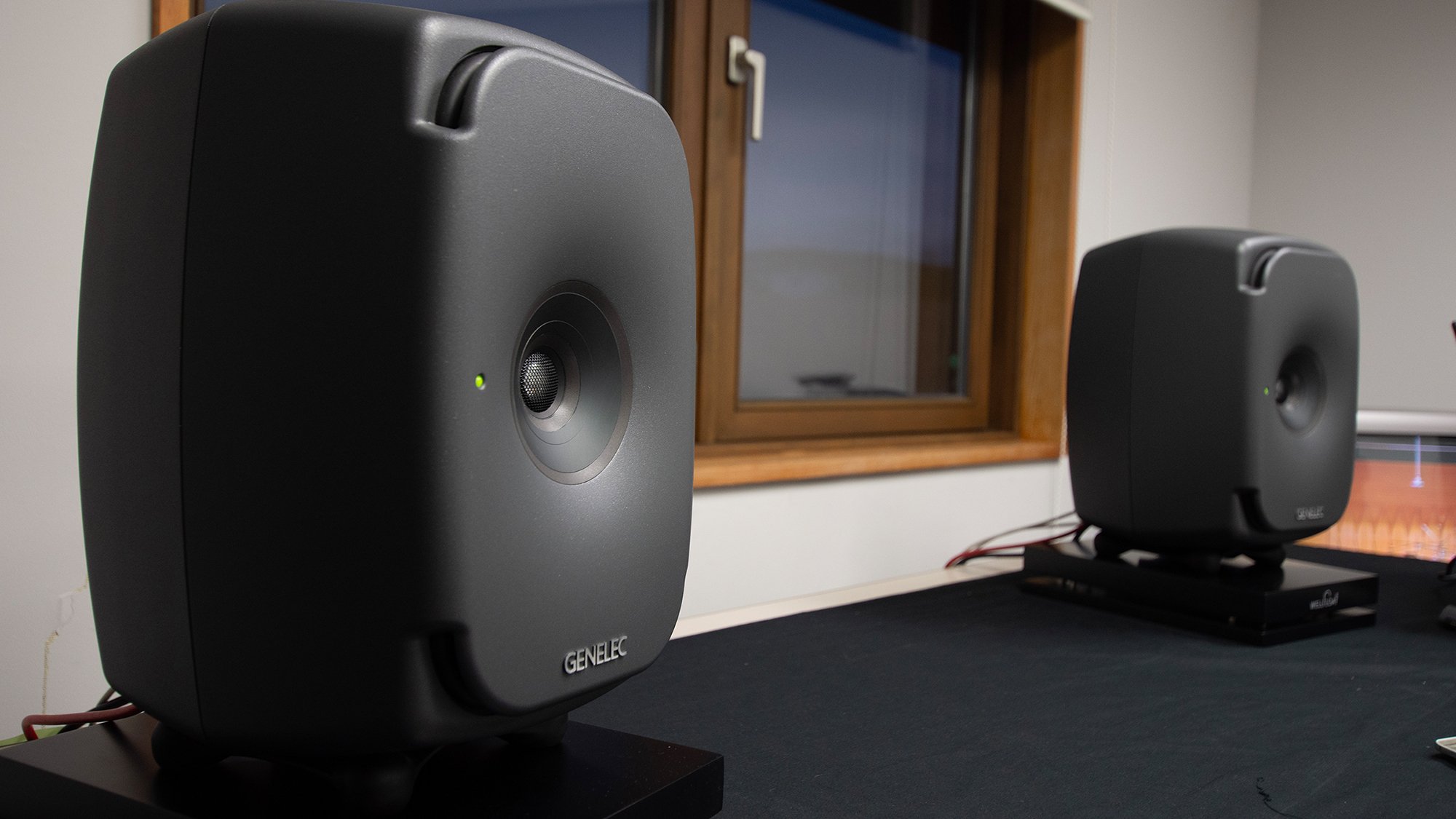
Monitoring Speakers: Genlec 8341A
We output the signals from the main system’s MADIface XT to the speakers to monitor the audio. For the speaker’s insulator, we used the Wellfloat brand’s Welldelta.
Endless Ideas to Record Atmosphere in Music
In addition to the microphone setup, equipment, and recording method, we continued to apply numerous ideas.
We made detailed adjustments, from space layout to installation methods, so that we could get a record of the subtle details, such as reverberations filling the concert hall, the natural tone of the piano, and even the vibrations in the air.
Piano Tuning
The piano was tuned by tuner Jun Teranuma, who has tuned Fukui’s piano for many years. Proper tuning that fully brings out the performer’s musical expressions is born from a deep relationship of trust and many years of experience. This is relevant in music recording as well; a tuned sound allows for a beautiful sound throughout the entire performance.
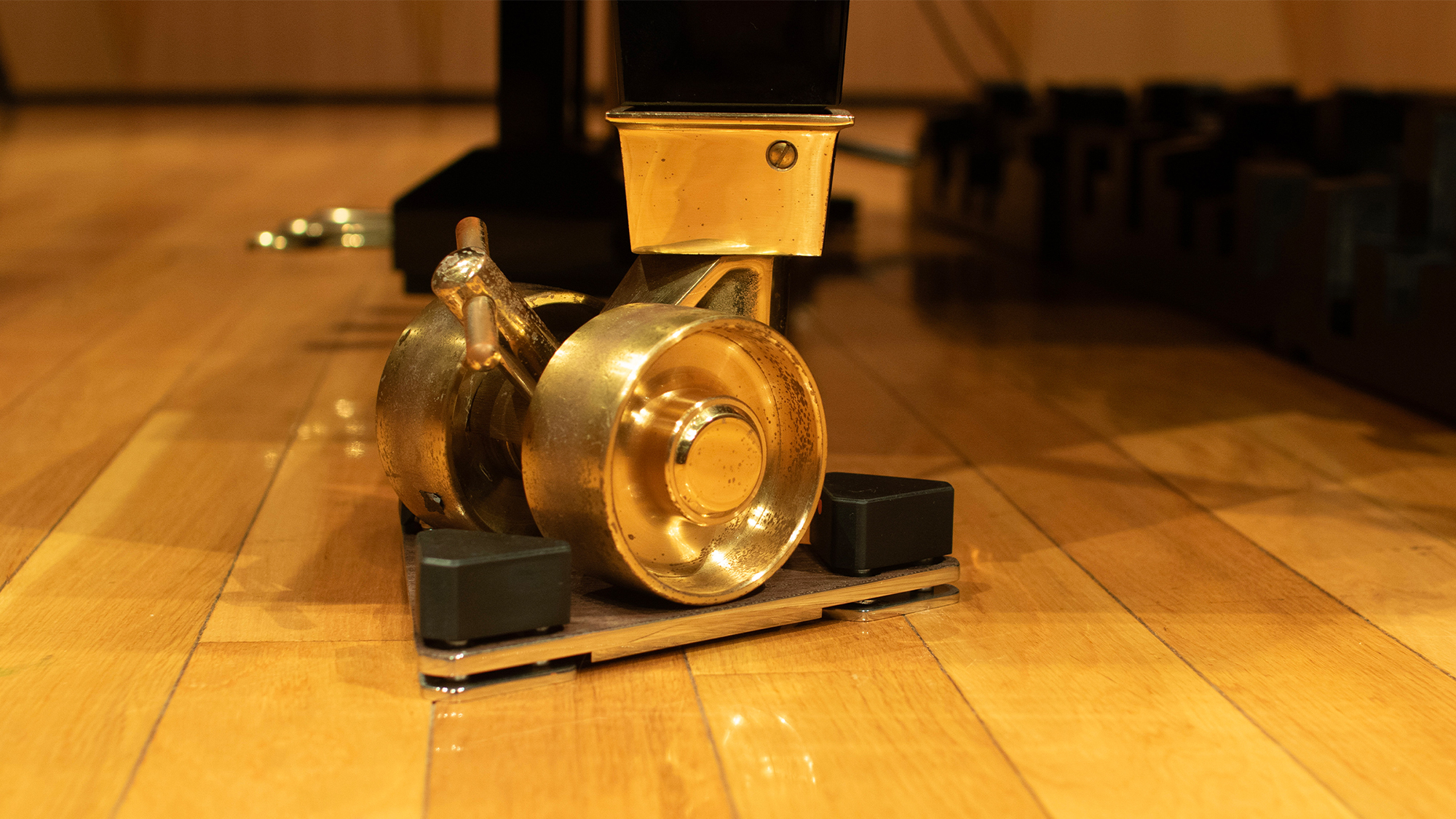
Instrument Insulator (Welldelta)
When placing the piano, we used a Welldelta specialized for a full concert grand piano, developed by G Clef Acoustic.
By preventing the piano’s acoustic energy from leaking through the floor, the piano efficiently emits sound waves from its main body. Also, by cutting off any unnecessary vibrations from the floor, we can reduce creaking sounds from the wood. As a result, we can convey the piano’s true sounds without any impurities and bring out a clearer, more natural sound.
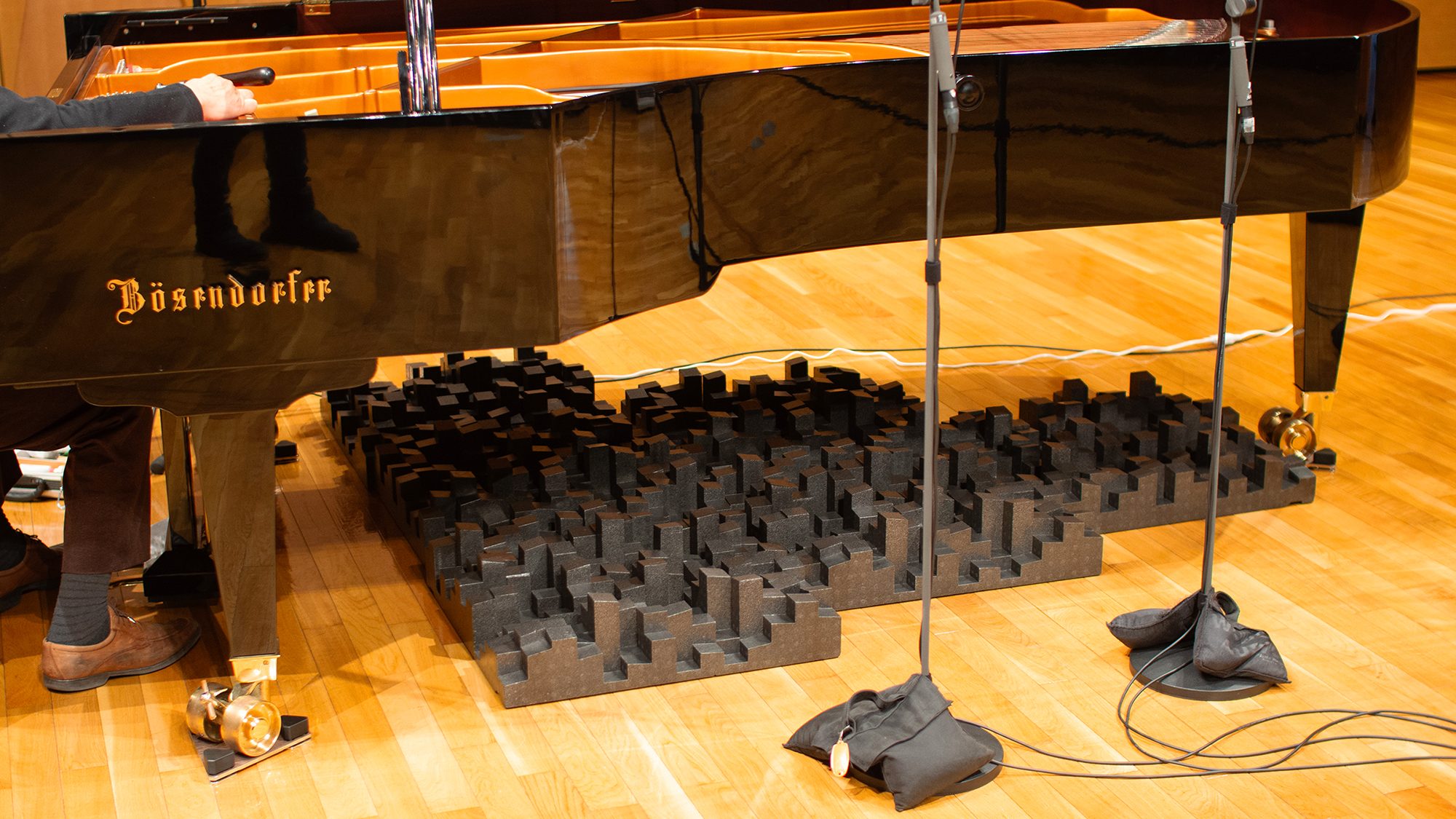
Diffusion Panel: Vicoustic Multifuser DC3
We installed Vicoustic’s diffusion panel, the Multifuser DC3, under the piano. This diffuses sound reverberations from the floor and is meant to suppress any low-frequency muddiness and uneven reverberations.
Nostalgia of the Future – Japonism is a work in which everything about the performance, recording, and spatial layout is carefully integrated into a single work of art.
Please take a listen and experience new musical possibilities, brought to you by the fusion of performance and recording technology.
About the Collection
Mana Fukui, Nostalgia of the Future – Japonism
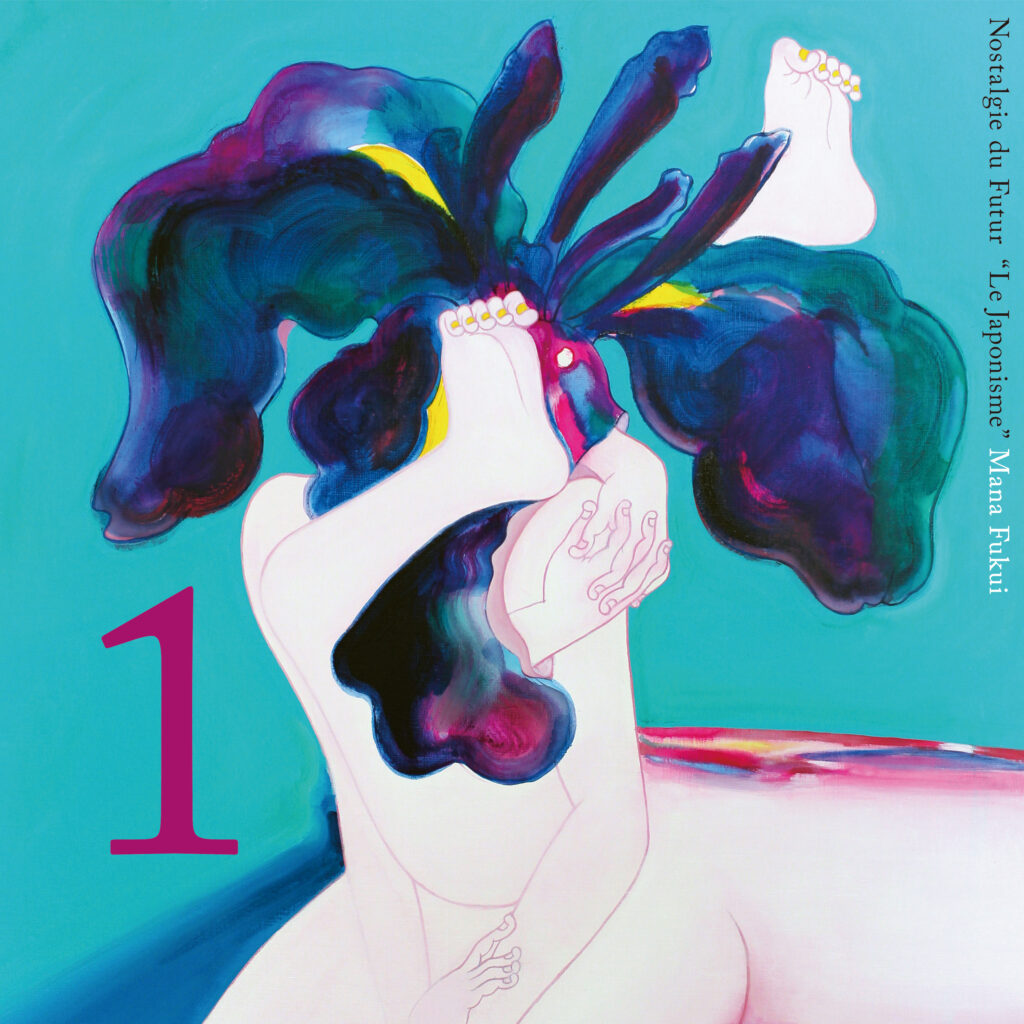
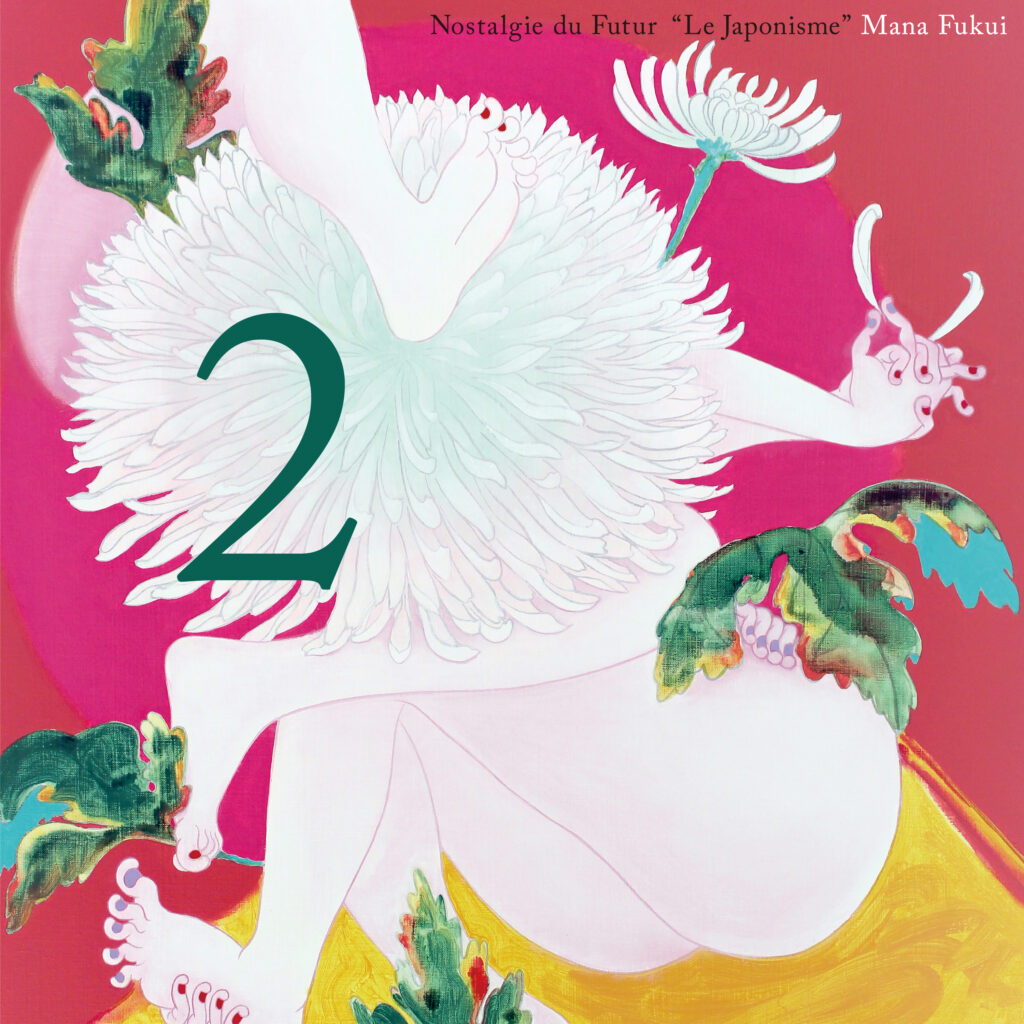
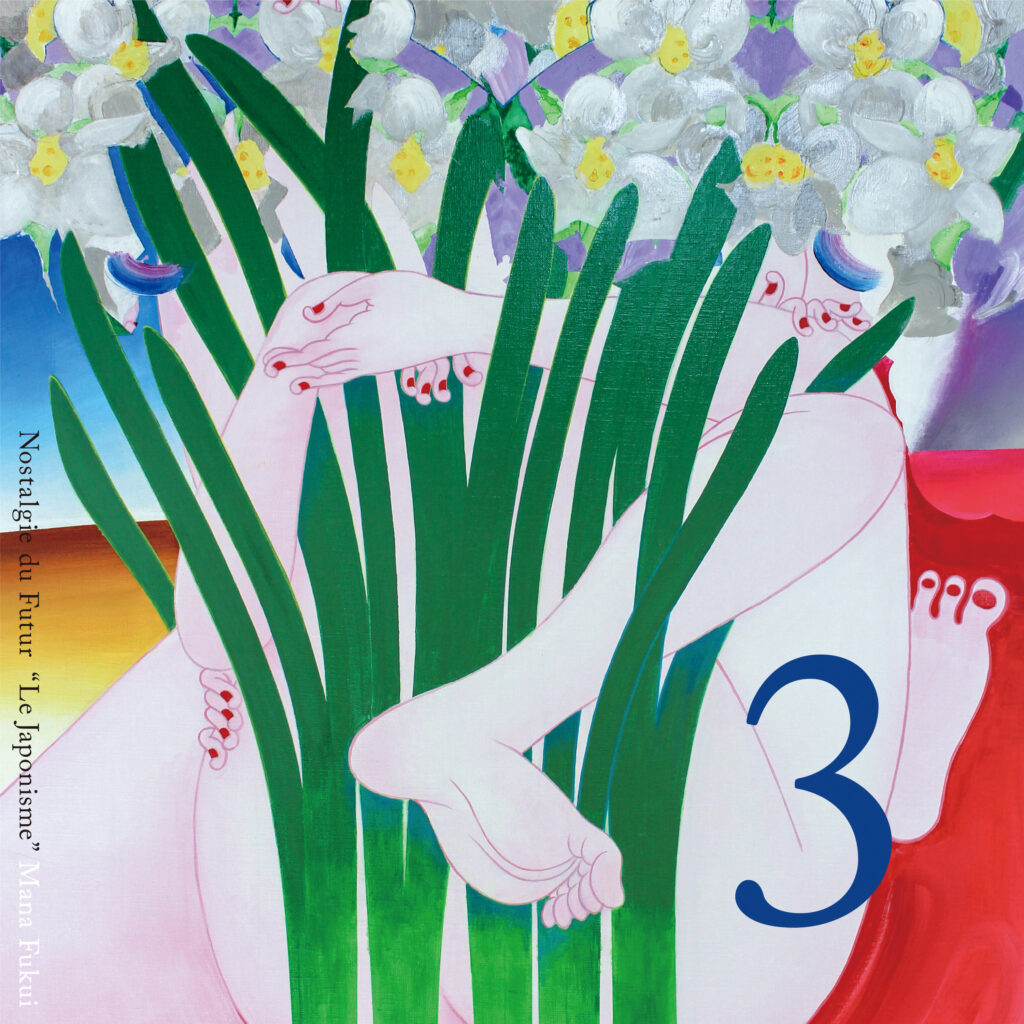
Transcending time and culture and intersecting them, pianist Mana Fukui connects the past and future of Japonism through a trilogy of albums.
The trilogy features works by composers influenced by “Japonism,” including Debussy, Scriabin, and Szymanowski, as well as pieces by Toru Takemitsu, whose music strongly reflects the tradition of French composers such as Debussy and Messiaen.
This exquisite collection of works is themed around Japonism and embraces French music, the Orient, and the blending of East and West.
*Stereo and Dolby Atmos versions of this collection can be enjoyed on all types of music subscription services.
Hideo Irimajiri
RME Premium Recordings
Music Director/Executive Producer
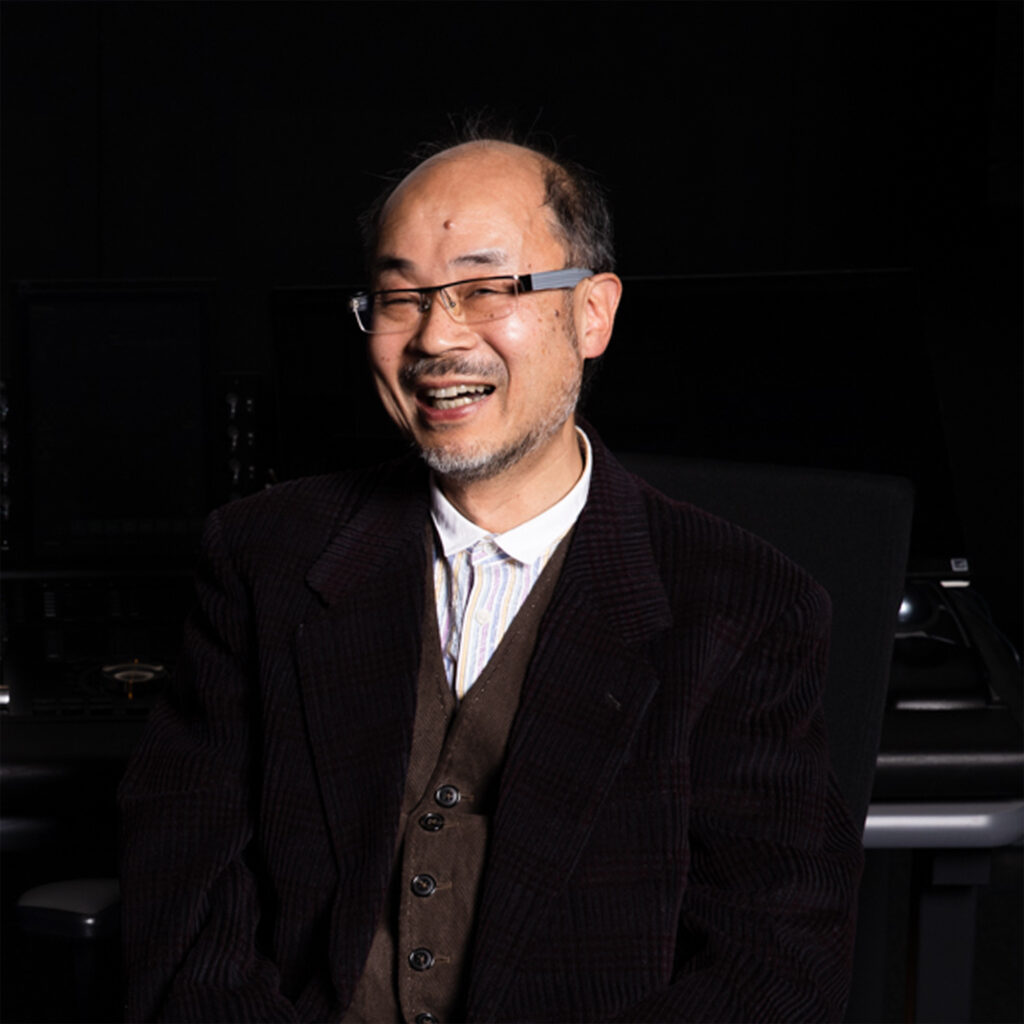
Born in 1956. Graduated from the Kyushu Institute of Design’s Department of Acoustic Design in 1979 and graduated from the same school’s graduate program in 1981. Irimajiri acquired a doctorate in reverberation research in 2013 and joined Mainichi Broadcasting System, Inc. in 1981, subsequently working in the Video Technology Department, Audio Technology Department, Hall Technology Department, Post Production Department, and Mastering Department. Since 2017, Irimajiri has worked at WOWOW Inc. on developing technology and business for producing immersive audio. In 2025, Irimajiri started the Irimajiri Immersive Audio Research Lab and established the Naramachi Studio. He is currently the music director at RME Premium Recordings.
In 1987, Irimajiri was involved in developing the broadcast industry’s first high school baseball sound broadcast project. In 2005, Irimajiri also engaged in researching the volume issue in broadcasting, was an ARIB committee member, and worked on standardization as a committee member of the Japan Commercial Broadcasters Association. Irimajiri has worked on sound recording since his school days, focusing particularly on 4-channel recordings and spatial acoustics. He is currently developing technology for 3D audio recordings, while also enthusiastically working on production and promotion activities.
2021: Isao Tomita “The Tale of Genji: Symphonic Fantasy” (Grand Prize Winner of the Japan Professional Music Recording Award)
2021: Bob James “Feel Like Making Live” UHD BD
2024: MR. BIG “The BIG Finish Live” UHD BD
Irimajiri also personally produces his own music under the name Jiro Irima, working on the opening theme for the National High School Rugby Tournament at Hanazono, the PC game Record of Lodoss War, and more.
Mana Fukui
Piano
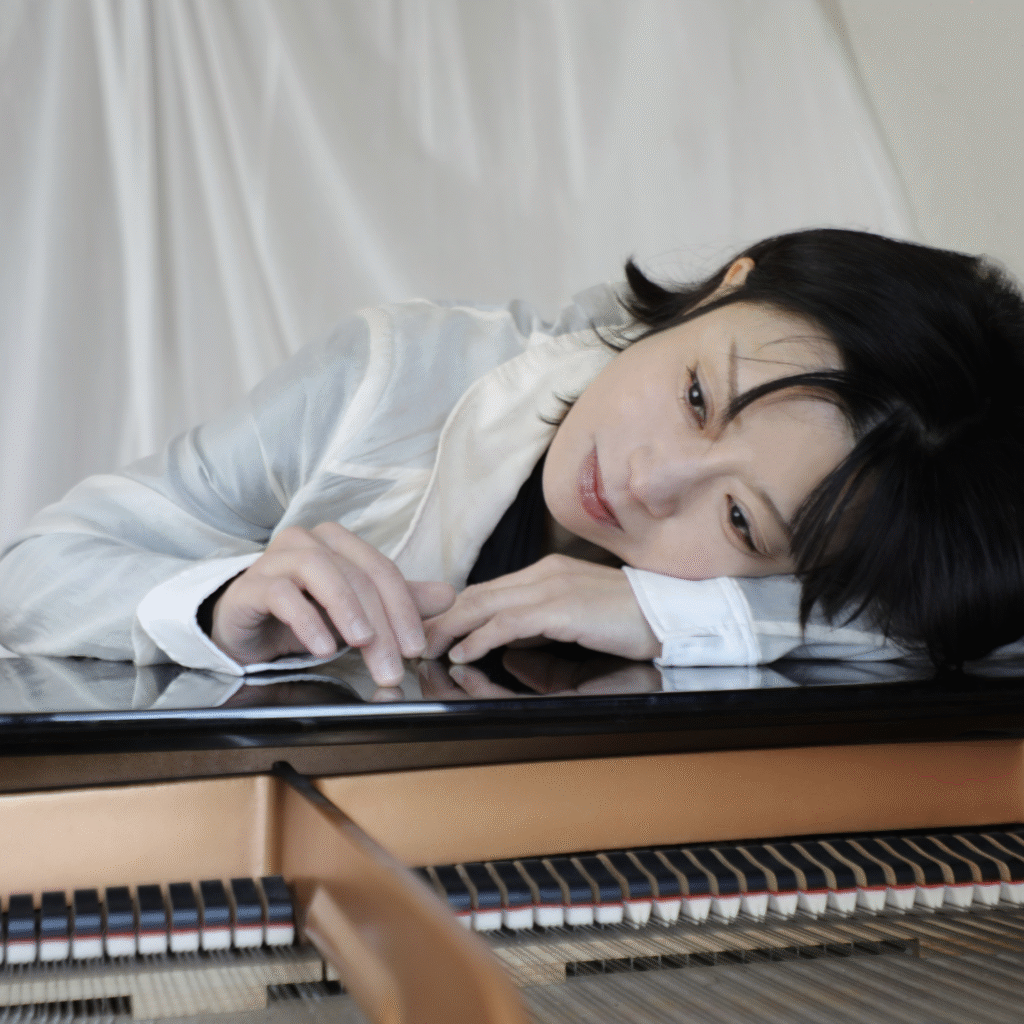
While enrolled in the piano course at the Toho Gakuen School of Music, she studied in Moscow under Assanetta Gavrilov. After graduating from Toho Gakuen, Fukui graduated from the piano course and accompaniment course at the music conservatory in Paris’s 17th arrondissement, earning First Prize unanimously in her examination. Since then, Fukui has provided instruction to chamber music and vocal classes at a conservatory in Clamart, as well as teaching the next generation of pianists at a conservatory in Charenton-le-Pont.
Fukui is also actively engaged with contemporary music and regularly takes part in the contemporary music festival Musique de Notre Temps. In addition, she is highly regarded for her advanced sight-reading skills and extensive chamber music repertoire, earning her a position as a judge and official accompanist for le diplome d’etudes musicales (the French national music certification), as well as numerous international music festivals and competitions. During that time, she also performed in Paris and throughout Europe, mainly focusing on recitals and chamber music.
After returning to Japan in 2015, she poured her energy into performing and held a widely praised solo recital in 2018 at Tokyo Opera City. Since 2022, she has used her extensive experience in chamber music to start a chamber music series as the musical director, which has received very positive reviews. She is currently proactively engaged in a wide range of work, from creating music for commercials to collaborating with dance and film productions.
